Grazie! Your submission has been received!
Oops! Something went wrong while submitting the form.
Search icon
Skript
Found:
This is some text inside a div block.
Articles
Rehabilitation After Arthroscopy: What You Need to Know
After joint arthroscopy, it is necessary to restore movement, weight-bearing ability, muscle strength, and the capacity to tolerate everyday activity.
#hand
#knee
#elbow
#shoulder
#foot
Shoulder and Arm Pain: Causes and Treatment
The shoulder has a wide range of motion, which makes it particularly sensitive to injuries, overuse, and inflammatory changes.
#shoulder
Intra-Articular Injections: Indications and Risks
Intra-articular injections are a common treatment option for joint pain. They may provide relatively rapid relief, improve mobility, and help a person return to everyday activities.
#knee
#shoulder
#thigh
Ankylosing Spondylitis: What It Is, Symptoms, and Diagnosis
Ankylosing spondylitis, also known as Bechterew’s disease, is a chronic inflammatory condition that affects the spine and sacroiliac joints. Over time, it can limit mobility and significantly affect quality of life.
#back
Osteoarthritis of the Joints: Symptoms, Causes, and Treatment
Osteoarthritis is a chronic disease of the entire joint in which the articular cartilage gradually deteriorates, bone tissue changes, and the surrounding joint structures function less effectively.
#hand
#knee
#elbow
#shoulder
#thigh
Rheumatoid Arthritis: Symptoms and Rheumatoid Factor
Rheumatoid arthritis is a systemic autoimmune inflammatory disease that affects the joints, tendon sheaths, and other tissues throughout the body.
#hand
De Quervain’s Disease: Symptoms and Treatment Methods
De Quervain’s disease, also known as De Quervain’s tenosynovitis, is a condition affecting the first extensor compartment of the wrist. The thumb tendons pass through a narrowed tunnel and begin to glide with pain.
#hand
Hygroma: Causes and Effective Treatment
A hygroma is a superficial, bony formation near a joint or tendon canal that most often appears on the hand, wrist, or fingers.
#hand
Trigger Finger (Stenosing Tenosynovitis)
Stenosing ligamentitis disrupts the normal gliding of the finger tendon and gradually makes the usual hand movements more difficult. At first, a person feels stiffness, then a painful clicking appears, and at later stages the finger becomes fixed in a bent position.
#hand
Why Does a Finger Hurt: Main Causes and Treatment
Pain in the finger appears after injury, overload, inflammation or compression of the nerve. The symptom itself does not indicate one specific problem, because the source of discomfort can be a joint, tendons, ligaments, nerve or surrounding soft tissues.
#hand
Joint Contracture: Causes, Symptoms, Types, and Treatment Methods
Joint contracture is a persistent decrease in range of motion due to changes in the soft tissues and other structures around the joint. This condition interferes with everyday activities and can significantly worsen quality of life.
#hand
Can You Run with Osteoarthritis?
When running with arthrosis is possible, in which cases it is strictly not recommended, and what alternatives should be considered in order to maintain movement without harm to the joints - says Vasily Mellen, orthopedic surgeon and traumatologist of Mashtaler Ortho&Trauma Clinic.
#knee
What Are Compression Stockings?
When people think about treatment of the musculoskeletal system, they usually imagine surgery, fixation, and exercise. However, there is another component that works almost unnoticed while significantly affecting the recovery process: compression stockings.
#foot
#knee
Rehabilitation and Life After Hip Replacement
The pain that caused sleepless nights, restricted movement, and changed daily habits disappears. In the first days after surgery, patients notice that it becomes easier to stand up and sit down. It is a relief to stop thinking about every step.
#thigh
Innovative Bikini Approach for Hip Replacement Surgery
Bikini approach is a relatively new, minimally invasive method that is distinguished by its delicacy, less trauma and expressive aesthetics.
#thigh
Donor Meniscus Transplantation
This is an important milestone, as the procedure has been performed only eight times in Ukraine.
No items found.
Anterior Cruciate Ligament (ACL) Tear
The anterior cruciate ligament connects the femur and the tibia, helping stabilize the knee during bending, pivoting, and walking.
#knee
Super Inductive System
Super Inductive System (also known as High-Intensity Magnetotherapy) is a modern, effective, and safe method of pain treatment that works without invasive intervention.
#hand
#knee
#thigh
#elbow
#shoulder

De Quervain’s Disease: Symptoms and Treatment Methods

#disease

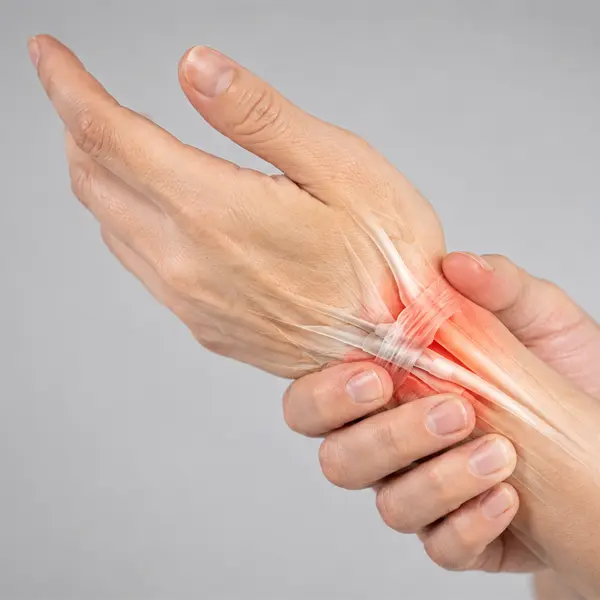
De Quervain’s disease is a common cause of pain on the thumb side of the hand and along the radial side of the wrist. It can interfere with gripping, limit everyday hand movements, and often becomes noticeable during routine activities, sports, or heavy physical work.

In this article, we explain what causes the condition, which symptoms are considered typical, how diagnosis and treatment are performed, and when a doctor may recommend surgery.

What Is De Quervain’s Disease?

De Quervain’s disease, also known as De Quervain’s tenosynovitis, is a condition affecting the first extensor compartment of the wrist. The thumb tendons pass through a narrowed tunnel and begin to glide with pain.

The condition is also described as stenosing tenosynovitis. The tendon sheath thickens near the radial side of the wrist, the fibrous tunnel becomes narrower, and every movement of the thumb increases friction. This leads to pain at the base of the thumb, tenderness on palpation, and a gradual reduction in hand function.

The two tendons most commonly affected are:

They extend from the forearm to the hand and are responsible for moving the thumb away from the hand and straightening it without moving the tip of the thumb. When the tunnel becomes narrowed, the tendons begin to move against mechanical resistance. For this reason, pain usually becomes worse when moving the thumb, bending the wrist sideways, or gripping objects firmly.

Main Causes of De Quervain’s Disease

The condition is not always caused by an injury. Most often, it is associated with:

Additional risk factors include pregnancy, the postpartum period, rheumatoid arthritis, and manual work involving repeated wrist strain.

In everyday life, the condition often develops in people who frequently carry a baby, use hand tools, perform repeated gripping and thumb abduction, or make the same hand movements throughout the day.

Without appropriate load modification, tendon irritation may persist for a long time. This maintains inflammation, causes thickening of the tendon sheath, and leads to further narrowing of the tunnel.

Symptoms of De Quervain’s Disease

Symptoms usually develop gradually. At first, a person may notice discomfort on the side of the wrist. Over time, the pain becomes more pronounced, soft tissue swelling may appear, and hand movements become more difficult. A typical feature of this condition is that pain is triggered by activity, such as gripping, twisting, squeezing, or lifting objects.

Pain in the Thumb and Wrist Area

The main symptom is pain on the thumb side of the wrist. It may initially remain localized but can gradually spread into the forearm. Patients often experience tenderness over the area where the tendons pass through the tunnel, as well as a feeling that thumb movement has become less smooth.

In De Quervain’s disease, pain typically becomes worse when:

As a result, simple activities such as opening a jar, lifting a kettle, or holding a phone may become painful.

Swelling and Limited Hand Movement

Another common symptom is localized swelling along the radial side of the wrist. Sometimes it appears as mild soft tissue swelling, while in other cases there is visible thickening that makes it more difficult to move the thumb or bend the wrist sideways.

Pinch grip strength may also decrease, and the hand may function less effectively during everyday activities. The range of motion around the thumb joint becomes limited because of pain rather than bone deformity.This distinction is important during diagnosis because the doctor must differentiate De Quervain’s disease from osteoarthritis at the base of the thumb and other causes of wrist and hand pain.

Increased Pain During Activity

Pain may become significantly worse during activity, especially when squeezing, pulling, lifting something in front of the body, or bending the wrist toward the little finger. For this reason, symptoms are often more severe by the end of the day or after repeated hand movements.

Typical complaints may occur while caring for a baby or working with a screwdriver, pruning shears, scissors, or other tools. If pain becomes worse during heavy physical work or even while holding a cup, a medical evaluation is recommended.

How De Quervain’s Disease Is Diagnosed

Diagnosis is mainly clinical. An orthopedic specialist or hand surgeon asks about:

The Finkelstein and Eichhoff tests are commonly used during diagnosis. The patient places the thumb inside the palm, closes the other fingers over it, and bends the wrist toward the little finger. If this movement causes sharp pain over the radial side of the wrist, the test supports the diagnosis.

X-ray imaging is usually not required. It may be ordered to rule out other conditions, such as osteoarthritis or the consequences of an injury. Soft tissue ultrasound may be used when the clinical presentation is atypical, when the condition of the tendons needs to be assessed more precisely, or before injection or surgical treatment.

Treatment Methods for De Quervain’s Disease

Treatment depends on how long the symptoms have been present, the severity of pain, the degree of functional limitation, and how the patient uses the hand at work and in everyday life. In the early stages, treatment usually begins with conservative methods. If pain persists, quickly returns, or significantly interferes with hand function, surgery may be considered.

Conservative Treatment and Reducing Hand Strain

The first step is to reduce the activities that trigger pain. Patients are advised to temporarily avoid:

A brace or splint may also be prescribed to keep the thumb and wrist in a more neutral position. This reduces friction between the tendons within the tunnel.

In the early stages, this approach may provide noticeable relief within four to six weeks. However, it is more effective when the patient genuinely changes the pattern of hand use rather than wearing the brace for only a few hours a day.

Medication and Physiotherapy

Nonsteroidal anti-inflammatory medications may be recommended to control pain and swelling. If symptoms persist, one of the most effective treatment options is a corticosteroid injection into the area of the tendon sheath. One or two injections provide significant relief for many patients.

Physiotherapy in this situation focuses on restoring functional hand movement. The patient may be taught:

When necessary, a physiotherapist or occupational therapist selects exercises for the hand, wrist, and forearm to reduce pain, maintain mobility, and prevent repeated overloading.

Hand Surgery for De Quervain’s Disease

Surgical treatment is considered when conservative methods do not provide sufficient relief. The procedure involves releasing the sheath of the first dorsal compartment to relieve pressure on the tendons. After the release, the tendons can glide more freely, and the pain decreases.

The operation is usually performed on an outpatient basis and does not require a prolonged hospital stay. Surgery does not change the function of the thumb itself. It removes the mechanical restriction that prevents the tendons from moving normally.

When Surgery Is Necessary

Surgery is not required in every case. However, a doctor may recommend it in the following situations:

The decision is made after a medical examination. The doctor considers the duration of the condition, previous treatment, the location of pain, and the patient’s actual functional needs.

Recovery After Treatment

After conservative treatment, recovery usually focuses on three main elements:

Once acute inflammation decreases, gentle thumb abduction and extension exercises, light wrist mobilization, and correction of everyday gripping techniques may be introduced to avoid repeated tendon overload. When treatment begins early, symptoms often improve noticeably within four to six weeks.

After surgery, the hand is usually bandaged for the first 48 hours or several days. The patient then begins moving the fingers, thumb, and wrist to prevent stiffness. During recovery, the wound is monitored, swelling is reduced, and pain medication may be used when necessary. A follow-up examination is usually scheduled after 10 to 14 days, when the sutures are removed if they are not absorbable.

If movement remains limited, the doctor may recommend physiotherapy or hand therapy to restore range of motion, grip strength, and a safe return to normal activity.

Prevention of De Quervain’s Disease

Prevention is based on controlling strain on the wrist and thumb. If work or everyday activities regularly involve forceful gripping, wrist twisting, or repetitive movements, it is useful to take regular breaks, adjust gripping techniques, avoid keeping the thumb in an abducted position for long periods, and pay attention to the first symptoms. This is especially important for people who perform manual work, care for an infant, or have previously experienced similar wrist pain.

If pain appears near the base of the thumb, soft tissue swelling develops, the area becomes tender on palpation, or symptoms worsen during activity, it is better not to wait until the condition becomes chronic. Early diagnosis helps the doctor select appropriate treatment sooner and may reduce the need for surgery.

Methods of treatment of this disease

No items found.

1100 UAH

Primary consultation of an orthopedist-traumatologist

2100 UAH

Urgent consultation of an orthopedist-traumatologist

Industry experts

The whole team

Patients’ stories

No items found.

Online booking

Required field*
Thank you!
Our administrators will contact you shortly
Oops.. something is wrong. Try reloading the page 
and repeat again!
Online recording