Full range of orthopedic services from diagnosis to rehabilitation. We provide assistance with injuries and diseases of the joints, as well as sports injuries.
HILT is a physical therapy method in which tissues are exposed to high-power laser radiation. Light energy is absorbed by the tissues, and the way it interacts with them depends on the wavelength, power, operating mode of the device, duration of exposure, and properties of the tissue itself.
#foot
#knee
#back
Knee Osteoarthritis: HILT
In the early stages, pain is often associated with physical load and improves with rest. A person may notice discomfort after a long walk, physical work, or exercise, even though the same level of activity previously caused no problems.
#knee
Disc Protrusion: Can It Be Treated Without Surgery?
Spinal disc protrusion can cause pain, numbness, and weakness in the limbs. Learn about diagnosis, non-surgical treatment, and rehabilitation.
#back
Herniated Disc: Symptoms, Causes, and Treatment Options
A herniated disc is a localized displacement of disc tissue beyond its normal anatomical boundaries.
#back
Rehabilitation After Arthroscopy: What You Need to Know
After joint arthroscopy, it is necessary to restore movement, weight-bearing ability, muscle strength, and the capacity to tolerate everyday activity.
#hand
#knee
#elbow
#shoulder
#foot
Shoulder and Arm Pain: Causes and Treatment
The shoulder has a wide range of motion, which makes it particularly sensitive to injuries, overuse, and inflammatory changes.
#shoulder
Intra-Articular Injections: Indications and Risks
Intra-articular injections are a common treatment option for joint pain. They may provide relatively rapid relief, improve mobility, and help a person return to everyday activities.
#knee
#shoulder
#thigh
Ankylosing Spondylitis: What It Is, Symptoms, and Diagnosis
Ankylosing spondylitis, also known as Bechterew’s disease, is a chronic inflammatory condition that affects the spine and sacroiliac joints. Over time, it can limit mobility and significantly affect quality of life.
#back
Osteoarthritis of the Joints: Symptoms, Causes, and Treatment
Osteoarthritis is a chronic disease of the entire joint in which the articular cartilage gradually deteriorates, bone tissue changes, and the surrounding joint structures function less effectively.
#hand
#knee
#elbow
#shoulder
#thigh
Rheumatoid Arthritis: Symptoms and Rheumatoid Factor
Rheumatoid arthritis is a systemic autoimmune inflammatory disease that affects the joints, tendon sheaths, and other tissues throughout the body.
#hand
De Quervain’s Disease: Symptoms and Treatment Methods
De Quervain’s disease, also known as De Quervain’s tenosynovitis, is a condition affecting the first extensor compartment of the wrist. The thumb tendons pass through a narrowed tunnel and begin to glide with pain.
#hand
Hygroma: Causes and Effective Treatment
A hygroma is a superficial, bony formation near a joint or tendon canal that most often appears on the hand, wrist, or fingers.
#hand
Trigger Finger (Stenosing Tenosynovitis)
Stenosing ligamentitis disrupts the normal gliding of the finger tendon and gradually makes the usual hand movements more difficult. At first, a person feels stiffness, then a painful clicking appears, and at later stages the finger becomes fixed in a bent position.
#hand
Why Does a Finger Hurt: Main Causes and Treatment
Pain in the finger appears after injury, overload, inflammation or compression of the nerve. The symptom itself does not indicate one specific problem, because the source of discomfort can be a joint, tendons, ligaments, nerve or surrounding soft tissues.
#hand
Joint Contracture: Causes, Symptoms, Types, and Treatment Methods
Joint contracture is a persistent decrease in range of motion due to changes in the soft tissues and other structures around the joint. This condition interferes with everyday activities and can significantly worsen quality of life.
#hand
Can You Run with Osteoarthritis?
When running with arthrosis is possible, in which cases it is strictly not recommended, and what alternatives should be considered in order to maintain movement without harm to the joints - says Vasily Mellen, orthopedic surgeon and traumatologist of Mashtaler Ortho&Trauma Clinic.
#knee
What Are Compression Stockings?
When people think about treatment of the musculoskeletal system, they usually imagine surgery, fixation, and exercise. However, there is another component that works almost unnoticed while significantly affecting the recovery process: compression stockings.
#foot
#knee
Rehabilitation and Life After Hip Replacement
The pain that caused sleepless nights, restricted movement, and changed daily habits disappears. In the first days after surgery, patients notice that it becomes easier to stand up and sit down. It is a relief to stop thinking about every step.
#thigh
Innovative Bikini Approach for Hip Replacement Surgery
Bikini approach is a relatively new, minimally invasive method that is distinguished by its delicacy, less trauma and expressive aesthetics.
#thigh
Donor Meniscus Transplantation
This is an important milestone, as the procedure has been performed only eight times in Ukraine.
No items found.
Anterior Cruciate Ligament (ACL) Tear
The anterior cruciate ligament connects the femur and the tibia, helping stabilize the knee during bending, pivoting, and walking.
#knee
Super Inductive System
Super Inductive System (also known as High-Intensity Magnetotherapy) is a modern, effective, and safe method of pain treatment that works without invasive intervention.
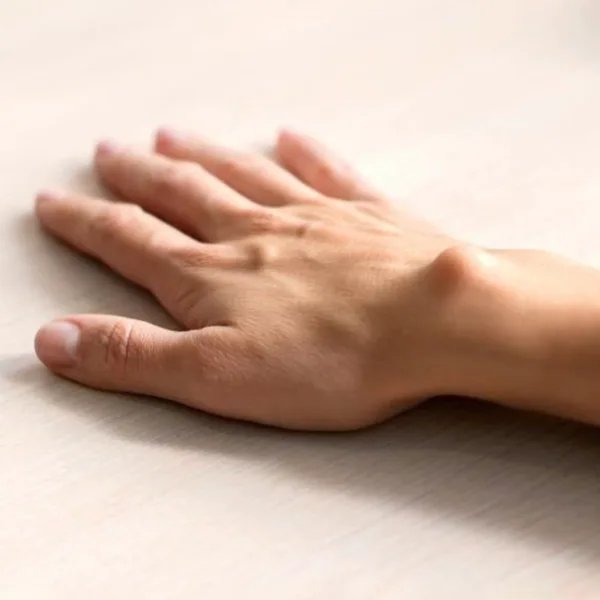
Hygroma — a superficial cyst-like formation near a joint or tendon canal that most often appears on the hand, wrist, or fingers. It does not belong to malignant tumors, but it can cause discomfort, interfere with movement, and raise concern if a person notices a new swelling under the skin.
In this article, we will explain how a hygroma forms, which factors contribute to its appearance, which symptoms are typical of this condition, and when an examination by a specialist is needed. We will also explain how diagnosis, observation, removal, and recovery after the intervention are carried out.
What is a hygroma?
Hygroma — a cystic formation filled with a thick gelatinous fluid, connected with the joint capsule or the tendon sheath. The most typical areas of its development are the dorsal surface of the wrist, the base of the finger, and the terminal joint of the finger.
Suspicion that this is a hygroma most often arises when a person notices a rounded elastic formation in the area of a joint that changes in size or becomes more noticeable after exertion. For clinical assessment, not only the shape and size are important, but also the connection with movement, pain, sensitivity, and hand function.
Hygroma on the hand in the form of swelling on the hand
How the Growth Forms
The cyst originates from the tissues that surround the joint, tendon sheath, or ligamentous structures, and it communicates with deeper tissues through a stalk or channel. Inside, there is a viscous content similar in its properties to the fluid that lubricates the joints.
In the international literature, this formation is also called “ganglion” or “ganglion cyst.” Its appearance is not associated with infection or oncologic growth, but with local changes in the capsule, tendon canal, and synovial tissue.
The size of the cyst is not constant. Against the background of active loading on the joint, it may increase, while at rest it becomes smaller or may even temporarily become almost unnoticeable.
How a Hygroma Differs from Other Tumor-Like Lesions
A hygroma usually has smooth contours, lies under the skin, is connected with a joint or tendon, and often changes in size over time. Unlike hard bony overgrowths, it is not part of the bone, and unlike a typical epidermoid cyst, it usually does not have a characteristic central opening in the skin.
A growth on a finger does not necessarily mean one specific lesion. Such a complaint may actually refer to:
hygroma;
mucous cyst of the terminal joint;
fibrokeratoma;
lipoma;
other soft-tissue formations.
That is why a final conclusion is made after an examination and, if necessary, an ultrasound. For additional assessment, formations that grow quickly, lie deep, have a diameter of 5 cm or more, move poorly relative to deeper tissues, or appeared suddenly without a clear reason are especially important. Such signs are not typical of a simple superficial cyst and require extended evaluation.
Causes of Hygroma Appearance
No single universal triggering mechanism has been established for every patient. Possible factors include repetitive loading, trauma, microtraumatization, and accompanying degenerative joint changes or inflammatory changes as factors that lead to the formation of such a lesion.
Joint Overload and Repetitive Movements
The best-known example is constant stress on the hand in athletes who frequently work with wrist extension and weight-bearing on the wrist. Hygromas are common among gymnasts, who repeatedly load the hand and wrist joint.
In everyday life, a similar situation occurs when working with tools, during prolonged forceful gripping, repeated squeezing of objects, or monotonous fine movements. It is precisely such actions that maintain local irritation in the area of the joint capsule or tendon canal.
Trauma and Microtraumatization
A single hand injury is not a mandatory condition for the appearance of a cyst, but it may precede its formation. Ganglia of the hand may arise against the background of damage to the capsule, ligamentous apparatus, or tendon structures.
Microtraumas occur differently. They do not produce one vivid episode of pain, but they maintain changes in the tissues for a long time, which over time form a synovial cyst.
Inflammatory Diseases of the Joints and Tendons
Mucous cysts near the terminal joint of the finger are often associated with early manifestations of osteoarthritis of this joint. This is a separate clinical variant that may be accompanied by a groove or nail deformity due to pressure.
Inflammatory changes in the tendons and periarticular tissues are also included in the list of causes. In such situations, the formation develops not in isolation, but against the background of already existing irritation or a degenerative process in the area of the tendon or joint capsule.
Is There a Hereditary Predisposition?
For ordinary hygromas of the hand, there is no convincingly confirmed hereditary mechanism. The main emphasis in clinical sources is placed not on genetics, but on local loading, the anatomical area, and accompanying joint changes.
A separate nuance concerns mucous cysts of the terminal joint of the finger. They occur more often in women aged 40 to 70 and are associated with degenerative changes of the distal interphalangeal joint.
Symptoms That Indicate a Hygroma
The most noticeable symptom is a visible or palpable rounded formation near a joint or tendon. Additional complaints depend on the location, size, pressure on surrounding tissues, and whether the cyst compresses nerves or blood vessels.
External Manifestations
A lump on a finger requires examination, because not every superficial formation is a hygroma. For a ganglion cyst, a smooth surface, elastic consistency, location near a joint, and the absence of signs of inflammatory infection are more characteristic, provided that the skin over the formation is not damaged and has not become hot.
Signs that the doctor evaluates during the appointment:
a rounded or oval swelling under the skin;
location in the area of the wrist, the base of the finger, or the distal interphalangeal joint;
a change in size after loading the hand;
smooth contours without pronounced irregularity of the skin;
sometimes translucency on transillumination if it is a superficial cyst.
sometimes translucency on transillumination if it is a superficial cyst.
As a rule, a small cyst without compression of nerve structures does not hurt at rest. However, the absence of pain does not eliminate the need for an examination if the formation is growing, becoming denser, or changing shape.
Pain and Limitation of Movement
Pain syndrome does not occur in all patients. If the cyst compresses a nerve, interferes with tendon gliding, or is located where the joint works actively, it causes pain, discomfort during movement, tingling, weakness of grip, and stiffness.
Symptoms are especially noticeable with a hygroma at the base of the finger or near the tendon canal. In such an area, even a small formation interferes with gripping objects and makes everyday activities associated with forceful gripping painful.
When a Hygroma May Cause Complications
Serious complications do not occur in every case, but doctors are well aware of a clear list of possible problems. These include:
nerve compression with pain or tingling;
reduced hand strength and limitation of movement;
nail deformity with a mucous cyst of the finger;
leakage of contents through thinned skin over the formation on the terminal joint of the finger.
Redness, increased skin temperature, sharp pain, or a hard immobile nodule are especially alarming. With such signs, you should consult a doctor without delay, because this is no longer the typical calm picture of an ordinary superficial cyst.
How Is Diagnosis Performed?
In most cases, diagnosis begins with an examination. The doctor clarifies how long ago the formation appeared, whether it changes in size, whether there is pain, numbness, limitation of movement, and whether there have been previous hand injuries.
Examination by an Orthopedic Doctor
During the examination, the doctor evaluates the location, shape, mobility, density, connection with joint movement, skin condition, and the presence of neurological symptoms. To choose the right treatment strategy, it is also important to understand whether the formation lies superficially or adjoins important structures, in particular a nerve or a vessel.
Signs for which the patient should make an appointment sooner:
the formation increases over a short period of time;
pain, tingling, or weakness of the hand has appeared;
the nodule has become hard and hardly moves;
the skin over it has become red or hot;
the tumor-like mass is located deep or exceeds approximately 5 cm.
Ultrasound of Soft Tissues
Ultrasound of soft tissues is used when it is necessary to confirm the cystic nature of the formation, assess its size, depth, boundaries, and relationship with surrounding structures. Ultrasonography helps determine whether the mass is cystic or solid, and also shows whether it is connected with vessels.
This is especially useful if the external picture is not entirely typical or the formation lies near a neurovascular bundle. For palmar wrist cysts and formations near the finger, this information affects both diagnosis and the choice of further management.
Methods of Hygroma Treatment
The management depends on the location, symptoms, rate of change, and the effect on hand function. If the formation is small, does not cause pain, and does not limit movement, observation is acceptable. If the cyst interferes with the function of the hand or recurs after aspiration, surgical intervention is considered.
Observation Without Surgery
For asymptomatic or minimally painful cysts, observation is considered a justified approach. International sources describe that such formations may partially or completely disappear over time. A lesion that does not require urgent removal may decrease or disappear on its own.
However, conservative treatment does not mean doing nothing. It includes reducing the load on the hand, temporary immobilization with an orthosis or bandage in case of pain, symptomatic pain relief, and follow-up over time.
Aspiration is also a non-surgical option, but its effectiveness is limited. After aspiration, recurrence is not uncommon, and for palmar wrist cysts this method is not always safe because of the proximity of nerves and blood vessels.
You must not puncture or crush the cyst yourself. Attempting to do this at home increases the risk of skin damage and infection.
Surgical Removal
Surgery is considered when the formation causes persistent pain, interferes with function, returns after aspiration, or constantly causes concern because of its location and symptoms. The essence of the intervention is to remove not only the cyst itself, but also its stalk or the part of the capsule from which it originates.
The procedure is usually performed under anesthesia as an outpatient or day-case procedure. For cysts around the finger, the operation is often performed under local anesthesia, while for wrist formations regional or, in some cases, general anesthesia is more often used because of the deeper connection with the joint.
No method eliminates the possibility of recurrence completely. In typical wrist and adult cysts, it is about 10%, in palmar wrist cysts about 30%. After aspiration, recurrences occur more often — more than 30–40%.
Recovery After Hygroma Removal
The postoperative period depends on the location of the cyst, the extent of the intervention, and the individual reaction of the tissues. Even when the removal is technically uncomplicated, the patient still needs some time for skin healing, swelling to subside, and a comfortable grip to return.
Healing Time
Return to usual activities after cyst excision often takes from two to six weeks. The first dressing change or wound check is often carried out on days 10–14, and scar sensitivity and swelling may sometimes persist longer.
After surgery, local pain, swelling, temporary reduction in grip strength, and scar sensitivity are possible. These are typical phenomena, and that is why the doctor explains in advance the expected course of recovery and the limits of loading on the hand.
Restriction of Physical Load
In the first days, the hand is usually protected from forceful loading, and the bandage is kept dry in accordance with the clinic’s recommendations. For the wrist, temporary immobilization is sometimes used for 1–2 weeks, while full return to sports or heavy manual work is postponed until the surgeon’s examination.
If the work is associated with tools, lifting loads, or prolonged forceful gripping, the return takes longer than with office work. Physically heavy work is postponed for several weeks until the pain and swelling decrease.
How to Reduce the Risk of Recurrence
Recurrence is associated not only with the fact of surgery itself, but also with the type of cyst, its location, and the condition of the surrounding joint. That is why the doctor evaluates whether there is nearby osteoarthritis, tendon irritation, pressure on a nerve, or areas of constant mechanical friction.
After healing, it is advisable to:
dose repetitive hand movements and reduce prolonged forceful gripping;
not return to heavy loads earlier than the doctor allows;
monitor the condition of the scar, swelling, and sensitivity of the hand after surgery;
consult a specialist again if the formation has reappeared or the nature of the pain has changed.
Frequently Asked Questions About Hygroma
Can a Hygroma Disappear on Its Own Without Treatment?
Yes, such a situation is described in several authoritative sources. A ganglion cyst can disappear without treatment over the course of several months. Some formations do not require immediate intervention and may decrease spontaneously.
However, conservative treatment is not suitable for everyone. If the mass is painful, growing, impairs movement, or raises doubts about the diagnosis, it is better to consult a doctor right away.
Is Hygroma Removal Painful and Which Method Is the Most Effective?
During the operation, anesthesia should eliminate pain at the very moment of the intervention. Discomfort is expected after the procedure, when the anesthesia wears off, but for this standard postoperative pain relief and a gentle loading regimen are prescribed.
Compared with surgery, observation is appropriate for asymptomatic cysts. Aspiration is not suitable in every case and has a higher rate of recurrence. Surgical removal is considered a more radical option for recurrent formations, because it makes it possible to remove both the cyst and its base.
What Is the Probability of Hygroma Recurrence After Treatment?
Recurrence is possible after any management strategy, but its frequency differs depending on the location and method of treatment. For some typical cysts, it is about 10% after surgery, for palmar wrist cysts about 30%, and after aspiration recurrences generally occur much more often.
If the formation has returned, you should not decide on your own that it is a harmless cyst. A repeat examination is needed in order to assess the source of the symptoms, the condition of the joint, and the appropriateness of further observation, aspiration, or surgical intervention.

.png)