Thank you! Your submission has been received!
Oops! Something went wrong while submitting the form.
Search icon
Script
Знайдено:  
This is some text inside of a div block.
 статті
Is it possible to run with arthrosis? Answer of the specialist
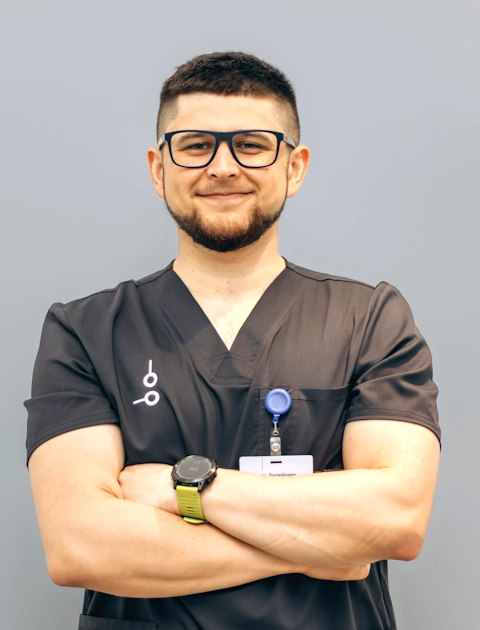
When running with arthrosis is possible, in which cases it is strictly not recommended, and what alternatives should be considered in order to maintain movement without harm to the joints - says Vasily Mellen, orthopedic surgeon and traumatologist of Mashtaler Ortho&Trauma Clinic.
#knee
What are compression stockings and who needs them?
This article is about what compression stockings are, why they are important in orthopedics, and how we apply them in an integrated approach to recovery in Mashtaler Ortho&Trauma Clinic.
#foot
#knee
Rehabilitation and life after hip endoprosthetics
How life changes after hip replacement, what to expect in the first weeks, what to strive for next and how to make recovery not only effective, but also natural.
#thigh
Bikini access during hip endoprosthetics
Bikini approach is a relatively new, minimally invasive method that is distinguished by its delicacy, less trauma and expressive aesthetics.
#thigh
The First Meniscus Transplant in the Western Region
This is an important achievement, because such an operation was carried out only for the eighth time in Ukraine.
No items found.
Endoprosthetics of the shoulder joint
Shoulder joint replacement surgery is performed to relieve pain and other symptoms that arise due to damage to the shoulder joint. The operation involves removing the affected areas of the bone and replacing them with parts — special implants made of metal or plastic.
#shoulder
Arthroscopy of the ankle
Arthroscopy of the ankle joint is a surgical procedure that allows the doctor to see all components of the joint, with minimal trauma to the surrounding tissues and a low risk of complications.
No items found.
Halus-valgus
Halus valgus or valgus deformity of the big toe is a pathological condition in which the thumb shifts to the side and looks like a large “bulging” growth. It is a condition that can significantly restrict movement and cause pain when walking.
#foot
PCV rupture: causes, mechanisms, symptoms — everything you need to know
Ligaments are strong fibers that connect bones together. The anterior cruciate ligament is one of two ligaments that cross at the center of the knee and connect the femur to the tibia. The anterior cruciate ligament is the main stabilizer of the knee joint. Injuries leading to its rupture provoke further instability of the knee.
#knee
High-Intensity Laser Therapy
High-intensity laser therapy is a powerful method of overcoming pain. På (biostimulation a fotomechanical effect), the laser accelerates the healing and regeneration processes. High-intensity laser technology is based on the principle of low-level laser therapy.
#hand
#knee
#thigh
#elbow
#shoulder
Super-inductive magnetotherapy
Superinductive magnetotherapy (also called High-Intensity Magnetotherapy) is a modern, effective and safe method of treating pain without direct intervention in the human body. This is possible due to the influence on the neuromuscular tissue of the magnetic field, which creates a special superinductive apparatus. Already after the first procedure, there is a noticeable reduction in pain.
#hand
#knee
#thigh
#elbow
#shoulder
BMAC
Nós,. BMAC regenerativna terapija je upravljanje, ki se.
#hand
#knee
#thigh
#elbow
#shoulder
Arthroscopy of the shoulder joint
Arthroscopy of the shoulder joint is a surgical procedure that allows the doctor to see all components of the joint, with minimal trauma to the surrounding tissues and a low risk of complications.
#shoulder

Is it possible to run with arthrosis

#метод

Running is one of the most popular forms of physical activity. It does not require special equipment, is available at any time and gives a feeling of freedom of movement. But for people diagnosed with arthrosis, the question sounds different: is it possible to run with arthrosis and will it not hurt my joints even more?

This is one of the most frequent questions that patients ask orthopedists. After all, on the one hand, movement is useful, on the other - there is a fear of harming and accelerating the wear of the joint. The answer here is not unambiguous. It all depends on the stage of the disease, the level of load, the technique of running and the individual condition of the joints.

When running with arthrosis is possible, in which cases it is strictly not recommended, and what alternatives should be considered in order to maintain movement without harm to the joints - says Vasily Mellen, orthopedic surgeon and traumatologist of Mashtaler Ortho&Trauma Clinic.

What is arthrosis and how does it affect the joints

Osteoarthritis is a chronic disease in which articular cartilage gradually collapses. Cartilage performs the protective function of the joint, reduces friction between bones and ensures smooth movements. When the cartilage is thinned or disappears, there is pain, limitation of mobility and limitation of joint function.

Most often, deforming osteoarthritis affects:

In the early stages, patients feel pain only after the load. As it progresses, discomfort appears at rest, and the joint gap narrows, there is a limitation of the amplitude of movement.

In the case of improper or excessive loads, degeneration is accelerated. Running is a shock load in which the weight of the body, multiplied by the inertia of the movement, acts on the joint. And although a healthy joint has a margin of strength, with arthrosis it is significantly reduced.

That is why the question “to run or not?” should be approached with a full understanding of the stage of the disease, the anatomy of the affected joint and the general condition of the patient.

Жінка біжить містом — приклад контрольованої фізичної активності при артрозі за рекомендаціями фахівців Mashtaler Ortho&Trauma.
An example of safe running activity for arthrosis

Is it possible to run with arthrosis

Running with arthrosis is not an easy topic. The first thing to consider is the stage of the disease.

When you can not run

There are cases when running is categorically contraindicated, as it will only deepen the problem:

In such cases, even a short run can cause sharp pain, inflammation or microtrauma in the joint that will make it difficult Treatment of arthrosis.

When you can run with restrictions

In the early stages of arthrosis — stage I — II, without severe pain, with preserved amplitude of movement — moderate running activity can be allowed, but only:

In such cases, running is considered as an individually permissible load, but never as an independent “treatment” of arthrosis.

What do uncontrolled running loads lead to:

If you can not run with arthrosis, then what remains to be done?

Refusing to run does not mean giving up movement. On the contrary, properly selected physical activity in arthrosis is critical, because it improves blood circulation, nourishes cartilage, maintains muscle tone and joint stability.

Specialists of Mashtaler Ortho&Trauma clinic recommend safer, but no less effective forms of exercise.

Scandinavian walking

Walking with sticks is a great alternative to running. It reduces the load on the knee and hip joints, helps to keep the back and body in the correct position, activates the work of the muscles.

Swimming and aqua aerobics

In the water, the joints are unloaded, and the muscles work actively. This is an ideal option for patients with arthrosis: minimum pressure on the affected area and maximum benefit for the entire musculoskeletal system.

Exercise bike (without resistance)

Circular movements of the pedals improve the nutrition of the articular cartilage, reduce stiffness and strengthen the muscular framework. It is important not to overload and avoid strong resistance.

Yoga and therapeutic gymnastics

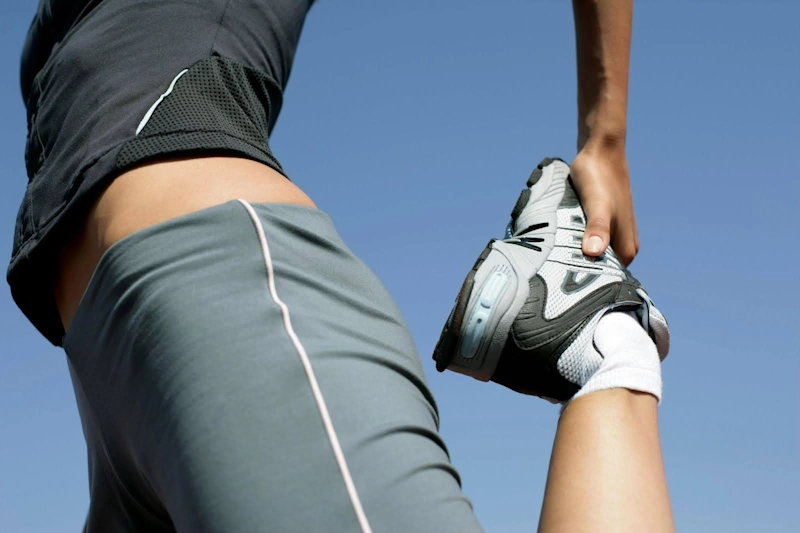
Спортсмен робить розтягнення перед бігом — приклад правильної підготовки суглобів при артрозі за порадами Mashtaler Ortho&Trauma.
An example of a safe warm-up to prevent joint overload

Subject to individual selection of the complex — it is soft joint mobilization, flexibility and balance training.

Movement is not an enemy of arthrosis, but an ally if it is dosed, controlled and selected taking into account the clinical picture. Running is only one of the options and far from the only one.

If you still want to run

For many, running is not just a sport, but part of a lifestyle, a form of restoring inner balance. And refusing it is perceived emotionally difficult. But even with arthrosis, running is not always contraindicated.

What to consider before returning to running

  1. Stage of arthrosis.Before you even think about running, you need to get an examination — MRI is the “gold standard” examination for osteoarthritis. Running is possible only in the early stages of the disease, without changes in the shape of the joint and without pronounced destruction of cartilage.
  2. Body weight.The higher the weight, the higher the pressure on the joint during each landing. Even a few extra pounds can negate all efforts.
  3. Muscle condition and joint stability.Muscles should be prepared: running against the background of a weak muscular corset is a direct path to overload.

How to minimize risks

Among the main recommendations of specialists are the following:

At Mashtaler Ortho&Trauma we believe: if you want to run, we are looking for a way to do it safely. But only after a careful assessment of the condition of the joint.

Position of Mashtaler Ortho&Trauma

In our clinic, we often meet patients who come with two extremes: some are afraid of any load, others are accustomed to suffer pain for the sake of movement. We are convinced that the truth is in the middle, and the decision must be personalized.

Running is not something that can not be done for everyone with arthrosis, but it is not recommended for everyone. Our goal is not just to give permission or ban, but to assess the functional state of the patient, joint, muscles, ligaments, posture - and only then make a decision.

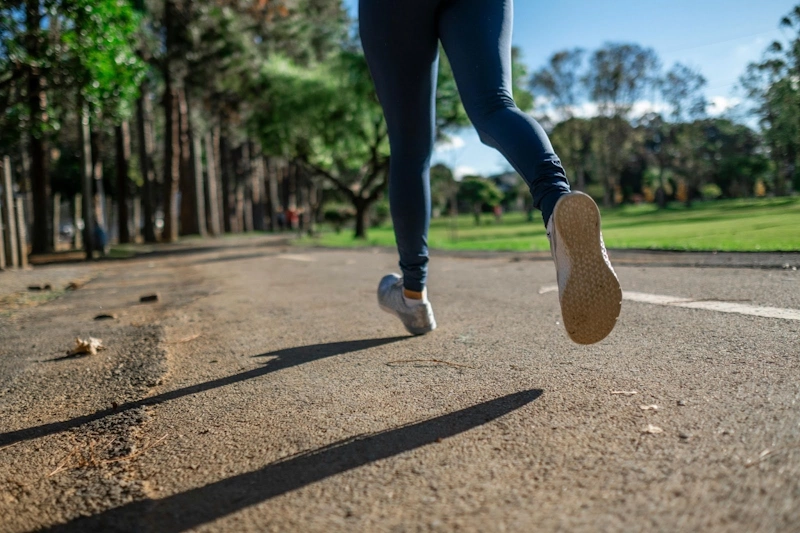
Легка пробіжка парком — приклад безпечної фізичної активності при артрозі за рекомендаціями ортопедів Mashtaler Ortho&Trauma.

At Mashtaler Ortho&Trauma we:

If the condition allows, we help to return to running gradually, without fanaticism, but with real chances of maintaining joint health.

Running with the mind and movement that does not hurt

Running with arthrosis is not taboo, but not dogma. It is only necessary to know when to run and when it is better to stop. The position of Mashtaler Ortho&Trauma Clinic specialists is simple: each joint has its own history, and each needs an individual approach.

If you feel like staying active, that's great. But not blindly. First — examination, diagnosis, assessment of biomechanics. Then — a phased return to the loads under the control of specialists. This is not the path to results “through pain”, but to conscious movement without complications.

Don't guess — consult. Make an appointment for an examination and, together with your doctor, determine whether running your joint is worth it. And if not, you will find an alternative that will save both movement and quality of life!

Методи лікування цього захворювання

No items found.

1600 грн.

Первинна консультація ортопеда-травматолога провідного

1200 грн.

Повторна консультація ортопеда-травматолога провідного

2700 грн.

Ургентна консультація ортопеда-травматолога провідного

Експерти в цій сфері

Вся команда

Історії пацієнтів

Online recording

Required field*
Thank you!
Our administrators will contact you shortly
Oops.. something is wrong. Try reloading the page 
and repeat again!
Online recording