Grazie! Your submission has been received!
Oops! Something went wrong while submitting the form.
Search icon
Skript
Found:
This is some text inside a div block.
Articles
Hygroma: causes and effective treatment
A hygroma is a superficial, bony formation near a joint or tendon canal that most often appears on the hand, wrist, or fingers.
#hand
Stenosing ligamentitis (clicking finger)
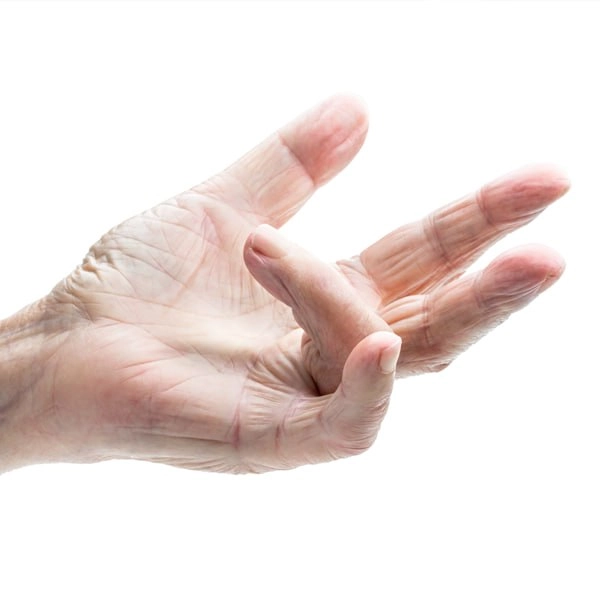
Stenosing ligamentitis disrupts the normal sliding of the tendon of the finger and gradually complicates the usual movements of the hand. The person first feels stiffness, then painful clicks appear, and in the later stages the finger is fixed in a bent position.
#hand
Why Does a Finger Hurt: Main Causes and Treatment
Pain in the finger appears after injury, overload, inflammation or compression of the nerve. The symptom itself does not indicate one specific problem, because the source of discomfort can be a joint, tendons, ligaments, nerve or surrounding soft tissues.
#hand
Joint contracture: causes, symptoms, types and treatments
Joint contracture is a steady decrease in the amplitude of movements due to changes in soft tissues and other structures around them. This condition interferes with the performance of the usual actions and can significantly impair the quality of life.
#hand
Can you run with osteoarthritis?
When running with arthrosis is possible, in which cases it is strictly not recommended, and what alternatives should be considered in order to maintain movement without harm to the joints - says Vasily Mellen, orthopedic surgeon and traumatologist of Mashtaler Ortho&Trauma Clinic.
#knee
What are compression stockings and who needs them?
This article is about what compression stockings are, why they are important in orthopedics, and how we apply them in an integrated approach to recovery in Mashtaler Ortho&Trauma Clinic.
#foot
#knee
Rehabilitation and life after hip endoprosthetics
How life changes after hip replacement, what to expect in the first weeks, what to strive for next and how to make recovery not only effective, but also natural.
#thigh
Bikini access during hip endoprosthetics
Bikini approach is a relatively new, minimally invasive method that is distinguished by its delicacy, less trauma and expressive aesthetics.
#thigh
The First Meniscus Transplant in the Western Region
This is an important achievement, because such an operation was carried out only for the eighth time in Ukraine.
No items found.
Endoprosthetics of the shoulder joint
Shoulder joint replacement surgery is performed to relieve pain and other symptoms that arise due to damage to the shoulder joint. The operation involves removing the affected areas of the bone and replacing them with parts — special implants made of metal or plastic.
#shoulder
Arthroscopy of the ankle
Arthroscopy of the ankle joint is a surgical procedure that allows the doctor to see all components of the joint, with minimal trauma to the surrounding tissues and a low risk of complications.
No items found.
Halus-valgus
Halus valgus or valgus deformity of the big toe is a pathological condition in which the thumb shifts to the side and looks like a large “bulging” growth. It is a condition that can significantly restrict movement and cause pain when walking.
#foot
PCV rupture: causes, mechanisms, symptoms — everything you need to know
Ligaments are strong fibers that connect bones together. The anterior cruciate ligament is one of two ligaments that cross at the center of the knee and connect the femur to the tibia. The anterior cruciate ligament is the main stabilizer of the knee joint. Injuries leading to its rupture provoke further instability of the knee.
#knee
High-Intensity Laser Therapy
High-intensity laser therapy is a powerful method of overcoming pain. På (biostimulation a fotomechanical effect), the laser accelerates the healing and regeneration processes. High-intensity laser technology is based on the principle of low-level laser therapy.
#hand
#knee
#thigh
#elbow
#shoulder
Super-inductive magnetotherapy
Superinductive magnetotherapy (also called High-Intensity Magnetotherapy) is a modern, effective and safe method of treating pain without direct intervention in the human body. This is possible due to the influence on the neuromuscular tissue of the magnetic field, which creates a special superinductive apparatus. Already after the first procedure, there is a noticeable reduction in pain.
#hand
#knee
#thigh
#elbow
#shoulder
BMAC
Nós,. BMAC regenerativna terapija je upravljanje, ki se.
#hand
#knee
#thigh
#elbow
#shoulder
Arthroscopy of the shoulder joint
Arthroscopy of the shoulder joint is a surgical procedure that allows the doctor to see all components of the joint, with minimal trauma to the surrounding tissues and a low risk of complications.
#shoulder

Stenosing ligamentitis (clicking finger)

#method

Stenosing ligamentitis disrupts the normal sliding of the tendon of the finger and gradually complicates the usual movements of the hand. The person first feels stiffness, then painful clicks appear, and in the later stages the finger is fixed in a bent position.

Today we will analyze the mechanism of development of the problem, typical causes, main symptoms, diagnostic principles and treatment approaches. After reading the article, you will learn when observation and conservative tactics are enough, and when doctors consider surgery.

What is stenosing ligamentitis and why does the “click” of the finger occur

In international sources, this condition is usually described as trigger finger or stenosing tenosynovitis. Its essence lies in the fact that the flexor tendon passes through the narrowed area of the tendon canal in the area of the A1 ring ligament (A1 pulley), so the movement becomes uneven and painful.

Clicking occurs when a thickened area of a tendon or its nodule passes through a dense canal with a mechanical obstacle. In everyday life, this condition is sometimes described as a crunchy finger. During its clinical evaluation, attention is paid to the blockage, soreness at the base of the finger and the nature of the motor restriction.

The problem is localized in the tendon area and its sheath, and not in the articular cartilage or ligaments. That is why the pain intensifies during movement, especially with flexion and subsequent extension.

Чому виникає клацаючий палець: біль, блокування, скутість. Діагностика та лікування у Львові Mashtaler Ortho&Trauma.
Clicking finger of the hand and pain when bending

Causes of the development of a clicking finger

In modern clinical practice, repeated force movements of the hand, concomitant systemic diseases, older age and minor repetitive tendon injuries are singled out as the main risk factors.

Excessive load on the brush

The risk is increased by actions that require strong or prolonged engagement. These include:

In such conditions, the tendon rubs against the narrowed section of the canal. This supports irritation, local inflammation and subsequent thickening of the tissues, which causes the ligamentitis to progress faster.

Concomitant diseases

Most often, doctors call diabetes mellitus and rheumatoid arthritis risk factors. In patients with such chronic diseases, the problem occurs more often, and the response to injectable and other conservative treatments may be weaker than in people without concomitant conditions.

If there is already a history of systemic inflammatory disease, the doctor assesses not only the finger itself, but also the general condition of the hand. This is necessary in order not to miss other sources of pain and stiffness that give a similar clinical picture.

Age-related changes and microtraumas of tendons

Lesions are more often recorded in older people, especially after forty years. A separate role is played by microtraumas that accumulate gradually and do not always have one clear episode of damage in the anamnesis.

Due to repeated overload, the tendon sheath is irritated, and the tendon itself slips worse. Over time, this goes from early discomfort to a stable mechanical blocking of movement.

Main symptoms and stages of the disease

The clinical picture usually develops gradually. At first, the person feels uncomfortable during the first movements, and then pain, clicks and difficulties with full extension are added.

Early manifestations

At the initial stage, complaints are not always sharp. More often there is morning stiffness, sensitivity in the palm of the hand at the base of the affected finger and the feeling that the movement is not quite free.

Early signs:

Such symptoms do not always interfere with household activities, but it is at this stage that the patient best notices the change in the usual movements of the hand.

Progression: pain, click, finger lock

Further, the symptoms become more pronounced. There is a painful click during movement, and the finger may suddenly linger in a bent position and extend only after additional effort with the second hand.

In more severe stages, the blockage is no longer episodic. In severe cases, described AAOS, the finger may not extend at all without the intervention of a medical specialist.

Which doctor treats and when to seek help

First, patients go to the family doctor, who evaluates the symptoms and selects the tactics for further action. If the problem does not go away, interferes with daily activities or progresses, the patient is usually examined by an orthopedic traumatologist, surgeon or other specialized specialist in hand pathology.

It is worth making an appointment with a doctor faster if:

This approach reduces the risk of persistent contracture, prolonged stiffness, and more difficult recovery after treatment.

Diagnosis of stenosing ligamentitis

In most cases, diagnosis is limited to examination. The doctor clarifies the complaints, the duration of the symptoms, the type of load on the hand, the presence of diabetes or rheumatoid process, and then evaluates the movement of the finger itself during the examination.

Clinical examination

During the examination, the doctor looks for four basic signs:

  1. Soreness over the tendon canal.
  2. Thickening or swelling of the shell.
  3. Active lock while driving.
  4. Reducing the smoothness of tendon sliding.

It is this set of symptoms that in most cases allows us to draw a conclusion. The doctor also assesses whether complete passive and active extension is maintained. This is important because prolonged fixation of the finger affects the prognosis of mobility and the choice of further tactics.

Do I need an ultrasound or additional examinations

In most cases, X-rays and MRI are not needed. A typical picture is often established already during a conversation and physical examination.

Ultrasound is used selectively when it is necessary to clarify the condition of the tendon, shell or exclude other pathology of the hand. In modern reviews, ultrasound is described as a useful tool to visualize ligament thickening, tendon nodules, and causes of blockage during movement.

Surgical treatment: when it is necessary

Not every patient needs surgery. Initially, conservative treatment is usually considered: reducing the provocative load, night splinting, anesthesia, soft mobilization exercises and, according to indications, injection of a corticosteroid into the tendon canal area.

Indications for surgery

Surgical treatment is considered when conservative treatments do not provide adequate control of symptoms. A separate indication is the situation when the finger is already blocked in flexion and does not extend even after careful assistance with the second hand.

The main indications for the operation:

The essence of the intervention is to release the ligament and restore the free sliding of the tendon. This operation is usually performed on an outpatient basis under local anesthesia, through a small incision or with the help of other minimally invasive techniques.

Recovery after intervention

After surgery, most patients are recommended to resume finger movements early. In the first days, pain, swelling in the palm and sensitivity in the incision area persist, and the complete disappearance of stiffness takes a few days longer than the skin to heal.

If the stiffness, swelling or pain lasts longer than expected, the doctor can connect physiotherapy. After surgery, it is important to follow the recommendations for dressings, loads and exercises, because this is what affects the return of the function of the hand.

Possible complications and relapse prevention

Without treatment or with late treatment, the disease can turn into a persistent lock and prolonged stiffness of the finger. After surgery, there are also risks, although they are less common: it is infection, damage to the finger nerve, preservation of the click, pain in the scar or incomplete restoration of the extension.

To prevent relapse, it is important to reduce the repeated force load on the brush, to correct the work regime in time, and not to ignore morning stiffness or repeated episodes of blocking. In the presence of diabetes or rheumatoid inflammation, monitoring the concomitant condition together with a specialist doctor is of additional importance.

Methods of treatment of this disease

No items found.

1100 UAH

Primary consultation of an orthopedist-traumatologist

900 UAH

Repeated consultation of the orthopedist-traumatologist

2100 UAH

Urgent consultation of an orthopedist-traumatologist

Industry experts

The whole team

Patients’ stories

No items found.

Online booking

Required field*
Thank you!
Our administrators will contact you shortly
Oops.. something is wrong. Try reloading the page 
and repeat again!
Online recording