Full range of orthopedic services from diagnosis to rehabilitation. We provide assistance with injuries and diseases of the joints, as well as sports injuries.
HILT is a physical therapy method in which tissues are exposed to high-power laser radiation. Light energy is absorbed by the tissues, and the way it interacts with them depends on the wavelength, power, operating mode of the device, duration of exposure, and properties of the tissue itself.
#foot
#knee
#back
Knee Osteoarthritis: HILT
In the early stages, pain is often associated with physical load and improves with rest. A person may notice discomfort after a long walk, physical work, or exercise, even though the same level of activity previously caused no problems.
#knee
Disc Protrusion: Can It Be Treated Without Surgery?
Spinal disc protrusion can cause pain, numbness, and weakness in the limbs. Learn about diagnosis, non-surgical treatment, and rehabilitation.
#back
Herniated Disc: Symptoms, Causes, and Treatment Options
A herniated disc is a localized displacement of disc tissue beyond its normal anatomical boundaries.
#back
Rehabilitation After Arthroscopy: What You Need to Know
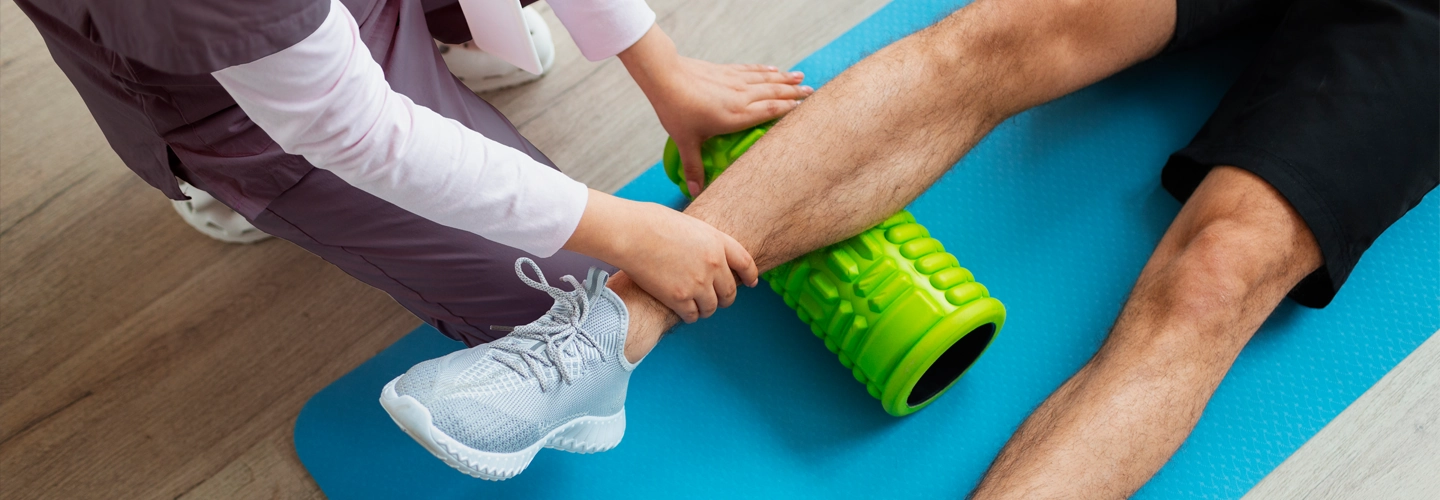
After joint arthroscopy, it is necessary to restore movement, weight-bearing ability, muscle strength, and the capacity to tolerate everyday activity.
#hand
#knee
#elbow
#shoulder
#foot
Shoulder and Arm Pain: Causes and Treatment
The shoulder has a wide range of motion, which makes it particularly sensitive to injuries, overuse, and inflammatory changes.
#shoulder
Intra-Articular Injections: Indications and Risks
Intra-articular injections are a common treatment option for joint pain. They may provide relatively rapid relief, improve mobility, and help a person return to everyday activities.
#knee
#shoulder
#thigh
Ankylosing Spondylitis: What It Is, Symptoms, and Diagnosis
Ankylosing spondylitis, also known as Bechterew’s disease, is a chronic inflammatory condition that affects the spine and sacroiliac joints. Over time, it can limit mobility and significantly affect quality of life.
#back
Osteoarthritis of the Joints: Symptoms, Causes, and Treatment
Osteoarthritis is a chronic disease of the entire joint in which the articular cartilage gradually deteriorates, bone tissue changes, and the surrounding joint structures function less effectively.
#hand
#knee
#elbow
#shoulder
#thigh
Rheumatoid Arthritis: Symptoms and Rheumatoid Factor
Rheumatoid arthritis is a systemic autoimmune inflammatory disease that affects the joints, tendon sheaths, and other tissues throughout the body.
#hand
De Quervain’s Disease: Symptoms and Treatment Methods
De Quervain’s disease, also known as De Quervain’s tenosynovitis, is a condition affecting the first extensor compartment of the wrist. The thumb tendons pass through a narrowed tunnel and begin to glide with pain.
#hand
Hygroma: Causes and Effective Treatment
A hygroma is a superficial, bony formation near a joint or tendon canal that most often appears on the hand, wrist, or fingers.
#hand
Trigger Finger (Stenosing Tenosynovitis)
Stenosing ligamentitis disrupts the normal gliding of the finger tendon and gradually makes the usual hand movements more difficult. At first, a person feels stiffness, then a painful clicking appears, and at later stages the finger becomes fixed in a bent position.
#hand
Why Does a Finger Hurt: Main Causes and Treatment
Pain in the finger appears after injury, overload, inflammation or compression of the nerve. The symptom itself does not indicate one specific problem, because the source of discomfort can be a joint, tendons, ligaments, nerve or surrounding soft tissues.
#hand
Joint Contracture: Causes, Symptoms, Types, and Treatment Methods
Joint contracture is a persistent decrease in range of motion due to changes in the soft tissues and other structures around the joint. This condition interferes with everyday activities and can significantly worsen quality of life.
#hand
Can You Run with Osteoarthritis?
When running with arthrosis is possible, in which cases it is strictly not recommended, and what alternatives should be considered in order to maintain movement without harm to the joints - says Vasily Mellen, orthopedic surgeon and traumatologist of Mashtaler Ortho&Trauma Clinic.
#knee
What Are Compression Stockings?
When people think about treatment of the musculoskeletal system, they usually imagine surgery, fixation, and exercise. However, there is another component that works almost unnoticed while significantly affecting the recovery process: compression stockings.
#foot
#knee
Rehabilitation and Life After Hip Replacement
The pain that caused sleepless nights, restricted movement, and changed daily habits disappears. In the first days after surgery, patients notice that it becomes easier to stand up and sit down. It is a relief to stop thinking about every step.
#thigh
Innovative Bikini Approach for Hip Replacement Surgery
Bikini approach is a relatively new, minimally invasive method that is distinguished by its delicacy, less trauma and expressive aesthetics.
#thigh
Donor Meniscus Transplantation
This is an important milestone, as the procedure has been performed only eight times in Ukraine.
No items found.
Anterior Cruciate Ligament (ACL) Tear
The anterior cruciate ligament connects the femur and the tibia, helping stabilize the knee during bending, pivoting, and walking.
#knee
Super Inductive System
Super Inductive System (also known as High-Intensity Magnetotherapy) is a modern, effective, and safe method of pain treatment that works without invasive intervention.
After joint arthroscopy, it is necessary to restore movement, weight-bearing ability, muscle strength, and the capacity to tolerate everyday activity. The recovery timeline depends on the exact procedure performed by the surgeon, such as joint examination, removal of a loose fragment, meniscus repair, ligament reconstruction, or tendon repair.
Below, we explain how recovery after arthroscopy is organized, which stages the patient goes through, and how the doctor assesses readiness for increased loading, everyday activities, work, and sports.
What Affects Recovery After Arthroscopy?
The rehabilitation program depends on which joint was operated on, which tissues were treated, whether weight bearing is allowed, and which movements are safe during the first weeks. These restrictions must be taken into account from the first day of rehabilitation.
Which Joint Was Operated On?
The knee, shoulder, ankle, and hip require different rehabilitation protocols. After knee arthroscopy, the doctor and physical therapist assess weight bearing, walking pattern, swelling, and muscle function. After shoulder arthroscopy, they monitor range of motion, shoulder blade position, and the patient’s ability to raise the arm safely.
Extent of the Surgical Procedure
Removal of a loose fragment, partial meniscectomy, meniscus repair, anterior cruciate ligament reconstruction, and rotator cuff repair all require different rehabilitation programs. If tissues were sutured or fixed, more restrictions on movement and loading are usually necessary during the first weeks.
The Patient’s Overall Condition
Recovery often progresses more effectively in patients who maintained adequate range of motion, walking control, muscle strength, or stable shoulder function before surgery. Age, body weight, sufficient rest, associated medical conditions, and the level of activity before the injury also affect the recovery period.
Following the Rehabilitation Plan
Regular short exercise sessions help maintain mobility, muscle activation, and predictable recovery progress. The intensity of loading is adjusted according to pain, swelling, movement quality, and the joint’s response after exercise.
The First Days After Arthroscopy: What Is Usually Important?
During the first days after surgery, it is important to control joint pain, swelling, and the condition of the surgical wound while beginning safe movement. The patient should clearly understand how to care for the dressing, when to take prescribed medications, how much weight can be placed on the limb, and when the first follow-up examination is scheduled.
During this period, the following are usually monitored:
body temperature;
pain at rest and during movement;
swelling around the joint;
skin color and temperature of the limb;
sensation in the fingers or toes;
permitted range of motion;
allowed loading of the arm or leg;
the joint’s response after home exercises.
After knee arthroscopy, cold therapy, compression, elevation of the leg, and controlled weight bearing with crutches are often important during the first days. Ankle movements, gentle quadriceps contractions, and restoration of full knee extension help the patient regain basic function more quickly.
After shoulder arthroscopy, the arm is more often protected with a sling. The hand, wrist, and elbow are usually kept moving to maintain circulation and reduce stiffness in nearby areas.
Increasing swelling, fever, discharge from the wound, pronounced redness, or worsening pain requires another medical examination. The doctor assesses the surgical area, tissue temperature, range of motion, and the appropriate level of loading.
Main Stages of Rehabilitation After Arthroscopy
Recovery after arthroscopy takes place in stages:
protection of the healing tissues;
restoration of movement;
muscle strengthening;
joint stabilization;
return to normal activity.
The exact timeline depends on the operated joint, the type of procedure, and the patient’s response to rehabilitation.
Stage 1: Protecting the Joint and Reducing Swelling
The first stage focuses on controlling postoperative inflammation. Cold therapy, compression, elevation of the limb, a brace, or temporary weight-bearing restrictions may be used according to the surgical protocol.
Permitted movements are included from the first days when they are appropriate for the type of surgery. For the knee, these may include ankle movements, thigh muscle contractions, and controlled bending. For the shoulder, the program may include hand and elbow movements and passive exercises within the limits approved by the surgeon.
Stage 2: Restoring Range of Motion
As pain and swelling decrease, exercises to improve range of motion are introduced. For the knee, these often include bending and straightening while lying down, heel slides, restoration of full extension, and control of movement symmetry.
After shoulder arthroscopy, progress depends on whether the tendons, joint capsule, or labrum were repaired. Passive movements within a limited range are usually introduced first. Active arm elevation begins only after the surgeon gives permission.
Stage 3: Muscle Strengthening and Joint Stabilization
Once functional range of motion has been restored, strengthening begins. For the knee, exercises target the quadriceps, hamstrings, and gluteal muscles. Balance, step control, squats, and stair climbing may also be added gradually.
After shoulder arthroscopy, rehabilitation focuses on the rotator cuff, shoulder blade muscles, and shoulder girdle. Loading under the supervision of a physical therapist helps restore movement accuracy without compensatory elevation of the shoulder.
Stage 4: Returning to Everyday Activities, Work, and Sports
The timing of return to work and sports is determined by joint function rather than by time alone. The patient should be able to walk without limping, control movement, and complete activity without developing reactive swelling afterward.
Office work often becomes possible earlier than physically demanding work. Running, jumping, contact sports, and forceful overhead movements are introduced only after strength, coordination, and stability have been assessed.
Rehabilitation After Knee Arthroscopy
The rehabilitation plan after knee arthroscopy depends on the specific procedure performed on the meniscus, cartilage, or ligaments. A partial meniscectomy usually has a shorter recovery period. Meniscus repair, anterior cruciate ligament reconstruction, and combined procedures require longer control of loading. Specific restrictions depend on which tissues were repaired.
When Can You Walk After Knee Arthroscopy?
After partial meniscectomy, walking is often allowed during the first days with support and crutches. The amount of weight bearing is adjusted according to pain, swelling, knee extension, and control of the thigh muscles.
After meniscus repair or anterior cruciate ligament reconstruction, weight bearing may be restricted according to the protocol. In these cases, the strength of the healing tissues is more important than how well the patient feels.
Recovery After Meniscus Surgery
After partial removal of a damaged part of the meniscus, the main goals are to reduce swelling, restore full extension, activate the quadriceps, and normalize walking. A home exercise program may include ankle movements, thigh muscle contractions, heel slides, straight leg raises.
After meniscus repair, the first weeks are more cautious. The doctor may restrict deep knee bending, squatting, rotational movements, and full weight bearing so that the repaired area can complete the initial stage of healing.
Rehabilitation After Anterior Cruciate Ligament Reconstruction
The early goals after anterior cruciate ligament reconstruction are to reduce swelling, restore full knee extension, activate the quadriceps, and normalize walking. The program then progresses to strengthening, balance, coordination, and knee control during more complex movements.
Running, jumping, and changes of direction are introduced at later stages. The transition is made only after assessment of muscle strength, stability, squat quality, landing control, and the joint’s response to training.
When Can You Return to Sports?
After a less complex arthroscopic procedure, light physical activity may be resumed within several weeks. Contact sports, sprinting, football, tennis, martial arts, and skiing require a longer period of preparation.
Return to sports requires nearly full range of motion, sufficient muscle strength, good balance control, stable landing mechanics, no swelling after exercise. The final decision is made by the doctor together with the physical therapist.
Rehabilitation After Shoulder Arthroscopy
The shoulder requires a careful balance between protecting the healing tissues and restoring movement early enough to prevent stiffness. After joint debridement, range of motion may return relatively quickly. After rotator cuff repair or shoulder stabilization, movements are introduced more slowly.
Why It Is Important to Prevent Stiffness After Shoulder Arthroscopy
After surgery, the shoulder joint capsule may lose elasticity quickly. This can limit arm elevation, external rotation, movements behind the back, and everyday activities performed at head level.
Hand and elbow movements, shoulder blade control, and permitted shoulder exercises help maintain mobility. The exact limits depend on the type of surgery.
Passive and Active Movement: What Is the Difference?
A passive movement is performed by a specialist, the healthy arm, or an assistive device. The operated shoulder does not produce the main effort. An active movement is performed independently by the patient.
After tendon repair, active elevation of the arm is often introduced later so that the repaired area has enough time to heal.
When Does Shoulder Mobility Return?
After removal of a loose body or joint debridement, mobility may return within several weeks.After rotator cuff repair, capsular surgery, or shoulder stabilization, full recovery often takes three to six months or longer.
Forceful overhead movements are introduced only after controlled arm elevation and stable shoulder blade function have been restored and the doctor has approved the progression. For patients whose work requires repeated overhead movements, the final stage of rehabilitation usually takes longer.
Exercises That May Be Included in the Recovery Program
The exercise program depends on the joint, the procedure, and the stage of rehabilitation. Home exercises are often divided into several short sessions throughout the day. This provides regular loading without excessive fatigue.
Exercises for the knee may include:
ankle movements to support circulation;
quadriceps contractions while lying down;
heel slides to restore knee flexion;
straight leg raises;
knee extension within the permitted range;
balance exercises;
gradual strengthening of the thigh and gluteal muscles.
Exercises for the shoulder may include:
hand squeezing exercises;
elbow and wrist movements;
pendulum exercises;
passive arm elevation;
exercises using a stick;
isometric muscle contractions;
external and internal rotation with an elastic resistance band.
Home exercises must correspond to the current stage of recovery. If the joint becomes noticeably swollen after exercise or movement becomes more limited, the program should be adjusted during a follow-up appointment.
What Should Be Avoided During Recovery After Arthroscopy?
During recovery, doctors restrict activities that may overload the healing tissues before the initial healing process is complete. These limitations protect the repaired meniscus, ligament, tendon, capsule, or cartilage area.
Activities that are usually temporarily restricted include:
progressing to full weight bearing without medical approval after meniscus repair or a more complex procedure;
deep squats and rotational movements of the knee;
running, jumping, and sudden changes of direction;
lifting weight with the operated arm;
forceful overhead movements after shoulder surgery;
increasing range of motion beyond the permitted limits;
applying heat to a joint with significant swelling;
returning to sports without functional assessment.
Rehabilitation progress is assessed according to joint condition, muscle strength, range of motion, and the tissues’ response after exercise. When loading is appropriate, the patient gradually progresses to greater activity while pain and swelling remain controlled.
How Can You Tell Whether Rehabilitation Is Progressing Properly?
Positive progress has clear signs. Swelling decreases, pain becomes manageable, range of motion improves, and everyday activities return without noticeable worsening the following day.
For the knee, important signs include full extension, an even walking pattern, stable activation of the thigh muscles, controlled stair climbing, no reactive swelling after exercise. For the shoulder, the doctor and physical therapist assess arm elevation, external rotation, movements behind the back, shoulder blade position, muscle strength without compensatory movement.
The program may require adjustment if pain continues until the following day, swelling increases, or range of motion temporarily becomes worse after exercise. In this situation, the doctor or physical therapist changes the intensity, number of repetitions, or timing of progression to the next stage.
Rehabilitation After Arthroscopy at Mashtaler Ortho&Trauma
At Mashtaler Ortho&Trauma, rehabilitation after arthroscopy begins with an examination of the postoperative area and assessment of pain, swelling, and range of motion. The physical therapist evaluates muscle function, determines whether weight bearing or range of motion can be increased, and selects exercises for home practice.
During follow-up visits, the program is adjusted according to the joint’s response.The patient receives clear recommendations on how to walk safely,how long to use a brace or sling, which movements to perform every day, when to return gradually to work, when to increase everyday activity, when it is safe to return to sports.

.png)