Grazie! Your submission has been received!
Oops! Something went wrong while submitting the form.
Search icon
Skript
Found:
This is some text inside a div block.
Articles
Rehabilitation After Arthroscopy: What You Need to Know
After joint arthroscopy, it is necessary to restore movement, weight-bearing ability, muscle strength, and the capacity to tolerate everyday activity.
#hand
#knee
#elbow
#shoulder
#foot
Shoulder and Arm Pain: Causes and Treatment
The shoulder has a wide range of motion, which makes it particularly sensitive to injuries, overuse, and inflammatory changes.
#shoulder
Intra-Articular Injections: Indications and Risks
Intra-articular injections are a common treatment option for joint pain. They may provide relatively rapid relief, improve mobility, and help a person return to everyday activities.
#knee
#shoulder
#thigh
Ankylosing Spondylitis: What It Is, Symptoms, and Diagnosis
Ankylosing spondylitis, also known as Bechterew’s disease, is a chronic inflammatory condition that affects the spine and sacroiliac joints. Over time, it can limit mobility and significantly affect quality of life.
#back
Osteoarthritis of the Joints: Symptoms, Causes, and Treatment
Osteoarthritis is a chronic disease of the entire joint in which the articular cartilage gradually deteriorates, bone tissue changes, and the surrounding joint structures function less effectively.
#hand
#knee
#elbow
#shoulder
#thigh
Rheumatoid Arthritis: Symptoms and Rheumatoid Factor
Rheumatoid arthritis is a systemic autoimmune inflammatory disease that affects the joints, tendon sheaths, and other tissues throughout the body.
#hand
De Quervain’s Disease: Symptoms and Treatment Methods
De Quervain’s disease, also known as De Quervain’s tenosynovitis, is a condition affecting the first extensor compartment of the wrist. The thumb tendons pass through a narrowed tunnel and begin to glide with pain.
#hand
Hygroma: Causes and Effective Treatment
A hygroma is a superficial, bony formation near a joint or tendon canal that most often appears on the hand, wrist, or fingers.
#hand
Trigger Finger (Stenosing Tenosynovitis)
Stenosing ligamentitis disrupts the normal gliding of the finger tendon and gradually makes the usual hand movements more difficult. At first, a person feels stiffness, then a painful clicking appears, and at later stages the finger becomes fixed in a bent position.
#hand
Why Does a Finger Hurt: Main Causes and Treatment
Pain in the finger appears after injury, overload, inflammation or compression of the nerve. The symptom itself does not indicate one specific problem, because the source of discomfort can be a joint, tendons, ligaments, nerve or surrounding soft tissues.
#hand
Joint Contracture: Causes, Symptoms, Types, and Treatment Methods
Joint contracture is a persistent decrease in range of motion due to changes in the soft tissues and other structures around the joint. This condition interferes with everyday activities and can significantly worsen quality of life.
#hand
Can You Run with Osteoarthritis?
When running with arthrosis is possible, in which cases it is strictly not recommended, and what alternatives should be considered in order to maintain movement without harm to the joints - says Vasily Mellen, orthopedic surgeon and traumatologist of Mashtaler Ortho&Trauma Clinic.
#knee
What Are Compression Stockings?
When people think about treatment of the musculoskeletal system, they usually imagine surgery, fixation, and exercise. However, there is another component that works almost unnoticed while significantly affecting the recovery process: compression stockings.
#foot
#knee
Rehabilitation and Life After Hip Replacement
The pain that caused sleepless nights, restricted movement, and changed daily habits disappears. In the first days after surgery, patients notice that it becomes easier to stand up and sit down. It is a relief to stop thinking about every step.
#thigh
Innovative Bikini Approach for Hip Replacement Surgery
Bikini approach is a relatively new, minimally invasive method that is distinguished by its delicacy, less trauma and expressive aesthetics.
#thigh
Donor Meniscus Transplantation
This is an important milestone, as the procedure has been performed only eight times in Ukraine.
No items found.
Anterior Cruciate Ligament (ACL) Tear
The anterior cruciate ligament connects the femur and the tibia, helping stabilize the knee during bending, pivoting, and walking.
#knee
Super Inductive System
Super Inductive System (also known as High-Intensity Magnetotherapy) is a modern, effective, and safe method of pain treatment that works without invasive intervention.
#hand
#knee
#thigh
#elbow
#shoulder

Intra-Articular Injections: Indications and Risks

#method

Intra-articular injections are a common treatment option for joint pain. They may provide relatively rapid relief, improve mobility, and help a person return to everyday activities. These injections can reduce pain, swelling, and inflammation, make movement easier, and support further rehabilitation. They are usually prescribed when basic treatment does not provide sufficient symptom control.

Below, we explain when joint injections are recommended, which medications may be used, how the procedure is performed, and what risks should be considered.

What Are Intra-Articular Injections?

An intra-articular injection involves administering medication directly into the joint cavity. The medication reaches the area affected by pain, inflammation, irritation of the synovial membrane, or excess fluid.

This method may be used for the knee, shoulder, hip, ankle, elbow, and small joints. The final decision depends on the diagnosis, severity of symptoms, patient’s age, activity level, and the expected treatment effect.

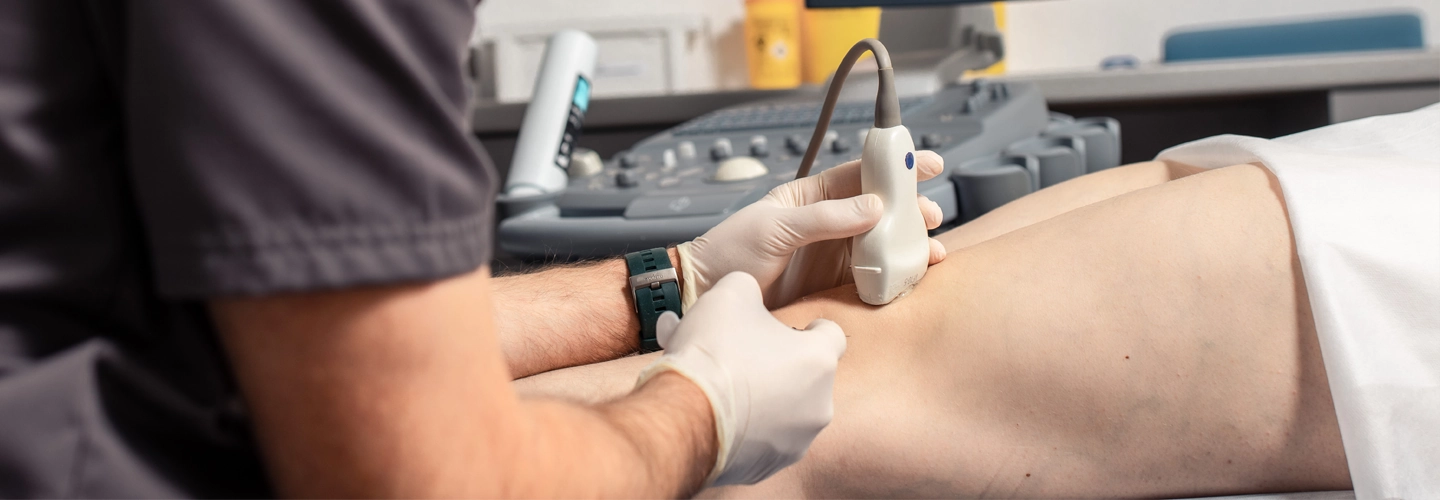
Before the procedure, the doctor assesses symptoms, range of motion, and joint stability. The medication is administered under ultrasound guidance, which helps ensure accurate placement in the intended anatomical area.

When Are Intra-Articular Injections Prescribed?

Injection treatment is used when pain or swelling interferes with movement. It is often combined with physical therapy, medication, activity modification, and management of the underlying condition.

The decision is not based on imaging results alone. The doctor also considers the patient’s actual symptoms, duration of discomfort, presence of synovitis, response to previous treatment, and the effect of the condition on quality of life.

Main Indications

The procedure may be prescribed when local administration of medication is expected to reduce symptoms. Most often, this involves inflammatory, degenerative, or post-traumatic changes within the joint.

The main indications include:

In osteoarthritis, injections are most often used during a flare-up. If the joint becomes deformed, loses its weight-bearing function, or remains constantly painful, the doctor develops a broader treatment plan.

Symptoms That Require Medical Evaluation

A medical consultation is recommended if pain continues for several days or repeatedly returns after activity. Swelling, morning stiffness, and reduced range of motion also require assessment.

Particular attention should be paid to joint locking, instability, clicking, or a feeling of friction inside the joint. These symptoms help the doctor distinguish between osteoarthritis, inflammation, injury, and damage to structures surrounding the joint.

Urgent medical attention is required if joint symptoms are accompanied by fever, redness, sudden severe swelling, or intense pain after an injury. These signs require prompt diagnosis because the appropriate treatment may be completely different.

Medications Used for Joint Injections

Several groups of medications may be used. The choice depends on the diagnosis, degree of inflammation, joint location, previous treatment, and expected duration of the effect.

  1. Corticosteroids. Corticosteroids are used to achieve faster control of localized inflammation, pain, and swelling. Relief usually begins within several days and may last for several weeks, sometimes up to two or three months. A repeat injection is considered only after the doctor assesses pain, swelling, cartilage condition, and the number of previous injections.
  2. Hyaluronic Acid. Hyaluronic acid may be injected to improve the properties of synovial fluid and reduce friction during movement. It is most often considered for early or moderate knee osteoarthritis. The effect usually develops over several weeks. The result depends on cartilage condition, inflammatory activity, body weight, and the mechanical load placed on the joint.
  3. Local Anesthetics. Local anesthetics may reduce discomfort during the procedure or help identify the source of pain. They are not used as an independent long-term treatment method.
  4. Platelet-Rich Plasma Therapy. Platelet-rich plasma, or PRP, may be considered for certain degenerative or overuse-related conditions. The doctor determines whether this approach is appropriate on an individual basis.
  5. Combined Treatment Plans. For some patients, an injection is only one stage of treatment. Once pain decreases, therapeutic exercises, activity modification, and further monitoring are added to the treatment plan.

Choosing a medication without medical guidance is unsafe. Similar pain may be caused by osteoarthritis, active synovitis, infection, crystal arthritis, trauma, or damage to tendons and ligaments.

Benefits of Intra-Articular Injections

The benefits of joint injections are most apparent when the treatment goal has been clearly defined. The procedure can reduce pain, influence local inflammation, and help the patient return to safer movement.

The main benefits include:

For patients experiencing a flare-up, injection treatment can help restore more comfortable movement. The best results are achieved when the selected medication is combined with physical therapy, controlled loading, and management of the underlying condition.

Possible Risks and Contraindications

A joint injection requires accurate technique and careful risk assessment. It must be performed under sterile conditions by a doctor who has a detailed understanding of the anatomy of the specific area.

When the Procedure Is Not Recommended

The procedure may be postponed or replaced with another treatment method when the risk of complications is greater than the expected benefit. Before the injection, the doctor assesses the condition of the skin, associated diseases, current medications, and possible contraindications.

The injection is not performed or may be postponed in the following situations:

Some of these restrictions are relative rather than absolute. In such cases, the decision depends on laboratory results, the type of medication, the timing of future surgery, and the patient’s overall condition.

Possible Complications

After an injection, the patient may experience temporary pain, a feeling of pressure, mild swelling, or tenderness at the injection site. These reactions usually improve gradually over the following days.

Less commonly, infection, bleeding into the joint, an allergic reaction, or tissue irritation may occur. After a corticosteroid injection, blood glucose levels may rise temporarily, particularly in patients with diabetes.

Repeated corticosteroid injections require additional caution. Excessively frequent administration may affect the cartilage, tendons, and surrounding tissues. 

It is important to monitor symptoms after the procedure. Increasing pain, fever, pronounced redness, or a sudden increase in swelling requires prompt contact with a doctor.

How an Intra-Articular Injection Is Performed

The injection technique differs depending on the joint. The knee can often be accessed using anatomical landmarks, while the hip or shoulder more commonly requires ultrasound guidance for accurate and safe medication placement.

The main stages of the procedure include:

  1. Medical assessment and confirmation of indications. The doctor reviews symptoms, previous treatment, allergies, associated diseases, and possible contraindications.
  2. Joint preparation. The patient is placed in a comfortable position, and the injection area is cleaned with an antiseptic solution.
  3. Local anesthesia. Local anesthesia may be used when necessary, particularly for sensitive or deeper anatomical areas.
  4. Needle placement. The doctor inserts the needle into the joint cavity using anatomical landmarks or image guidance.
  5. Fluid aspiration. If excess fluid is present, it may be removed before the medication is administered.
  6. Medication administration. The selected medication is injected slowly under mandatory ultrasound guidance, which helps direct it accurately to the intended area. The doctor monitors the patient’s sensations throughout the procedure.
  7. Completion of the procedure. The injection site is covered with a sterile dressing, and the patient receives recommendations regarding physical activity.

The joint should not be overloaded during the first several hours. The return to sports, heavy physical work, or intensive exercise should be gradual.

Do Intra-Articular Injections Help with Osteoarthritis?

In osteoarthritis, injections may reduce pain, stiffness, and the inflammatory component of a flare-up. The degree of benefit depends on the stage of the disease, cartilage condition, severity of synovitis, body weight, muscle strength, and daily joint load.

Corticosteroids are more often used when inflammation, joint effusion, and a noticeable increase in pain are present. Hyaluronic acid may be considered for knee osteoarthritis when the clinical situation is appropriate for this treatment.

Joint changes may progress more quickly with age when combined with excessive loading, weak muscle support, or previous injuries. The period of symptom relief after an injection should be used to restore movement, strengthen muscles, and address the factors contributing to pain.

Summary

An intra-articular injection is a medical procedure used to control pain, inflammation, and functional limitations. It may be helpful for osteoarthritis, synovitis, arthritis, and certain post-traumatic conditions.

A safe and effective result depends on an accurate diagnosis, appropriate medication selection, and technically correct administration. This sequence helps reduce symptoms, maintain mobility, and support the patient’s return to a more active everyday life.

Methods of treatment of this disease

No items found.

1100 UAH

Primary consultation of an orthopedist-traumatologist

4250 UAH

PRP therapy under ultrasound control

4950 UAH

Administration of hyaluronic acid under ultrasound control with Promovia 40 mg

2350 UAH

The introduction of steroids (blockade) under ultrasound control (including the cost of the drug)

Industry experts

The whole team

Patients’ stories

No items found.

Online booking

Required field*
Thank you!
Our administrators will contact you shortly
Oops.. something is wrong. Try reloading the page 
and repeat again!
Online recording