Grazie! Your submission has been received!
Oops! Something went wrong while submitting the form.
Search icon
Skript
Found:
This is some text inside a div block.
Articles
High-Intensity Laser Therapy: How HILT Works
HILT is a physical therapy method in which tissues are exposed to high-power laser radiation. Light energy is absorbed by the tissues, and the way it interacts with them depends on the wavelength, power, operating mode of the device, duration of exposure, and properties of the tissue itself.
#foot
#knee
#back
Knee Osteoarthritis: HILT
In the early stages, pain is often associated with physical load and improves with rest. A person may notice discomfort after a long walk, physical work, or exercise, even though the same level of activity previously caused no problems.
#knee
Disc Protrusion: Can It Be Treated Without Surgery?
Spinal disc protrusion can cause pain, numbness, and weakness in the limbs. Learn about diagnosis, non-surgical treatment, and rehabilitation.
#back
Herniated Disc: Symptoms, Causes, and Treatment Options
A herniated disc is a localized displacement of disc tissue beyond its normal anatomical boundaries.
#back
Rehabilitation After Arthroscopy: What You Need to Know
After joint arthroscopy, it is necessary to restore movement, weight-bearing ability, muscle strength, and the capacity to tolerate everyday activity.
#hand
#knee
#elbow
#shoulder
#foot
Shoulder and Arm Pain: Causes and Treatment
The shoulder has a wide range of motion, which makes it particularly sensitive to injuries, overuse, and inflammatory changes.
#shoulder
Intra-Articular Injections: Indications and Risks
Intra-articular injections are a common treatment option for joint pain. They may provide relatively rapid relief, improve mobility, and help a person return to everyday activities.
#knee
#shoulder
#thigh
Ankylosing Spondylitis: What It Is, Symptoms, and Diagnosis
Ankylosing spondylitis, also known as Bechterew’s disease, is a chronic inflammatory condition that affects the spine and sacroiliac joints. Over time, it can limit mobility and significantly affect quality of life.
#back
Osteoarthritis of the Joints: Symptoms, Causes, and Treatment
Osteoarthritis is a chronic disease of the entire joint in which the articular cartilage gradually deteriorates, bone tissue changes, and the surrounding joint structures function less effectively.
#hand
#knee
#elbow
#shoulder
#thigh
Rheumatoid Arthritis: Symptoms and Rheumatoid Factor
Rheumatoid arthritis is a systemic autoimmune inflammatory disease that affects the joints, tendon sheaths, and other tissues throughout the body.
#hand
De Quervain’s Disease: Symptoms and Treatment Methods
De Quervain’s disease, also known as De Quervain’s tenosynovitis, is a condition affecting the first extensor compartment of the wrist. The thumb tendons pass through a narrowed tunnel and begin to glide with pain.
#hand
Hygroma: Causes and Effective Treatment
A hygroma is a superficial, bony formation near a joint or tendon canal that most often appears on the hand, wrist, or fingers.
#hand
Trigger Finger (Stenosing Tenosynovitis)
Stenosing ligamentitis disrupts the normal gliding of the finger tendon and gradually makes the usual hand movements more difficult. At first, a person feels stiffness, then a painful clicking appears, and at later stages the finger becomes fixed in a bent position.
#hand
Why Does a Finger Hurt: Main Causes and Treatment
Pain in the finger appears after injury, overload, inflammation or compression of the nerve. The symptom itself does not indicate one specific problem, because the source of discomfort can be a joint, tendons, ligaments, nerve or surrounding soft tissues.
#hand
Joint Contracture: Causes, Symptoms, Types, and Treatment Methods
Joint contracture is a persistent decrease in range of motion due to changes in the soft tissues and other structures around the joint. This condition interferes with everyday activities and can significantly worsen quality of life.
#hand
Can You Run with Osteoarthritis?
When running with arthrosis is possible, in which cases it is strictly not recommended, and what alternatives should be considered in order to maintain movement without harm to the joints - says Vasily Mellen, orthopedic surgeon and traumatologist of Mashtaler Ortho&Trauma Clinic.
#knee
What Are Compression Stockings?
When people think about treatment of the musculoskeletal system, they usually imagine surgery, fixation, and exercise. However, there is another component that works almost unnoticed while significantly affecting the recovery process: compression stockings.
#foot
#knee
Rehabilitation and Life After Hip Replacement
The pain that caused sleepless nights, restricted movement, and changed daily habits disappears. In the first days after surgery, patients notice that it becomes easier to stand up and sit down. It is a relief to stop thinking about every step.
#thigh
Innovative Bikini Approach for Hip Replacement Surgery
Bikini approach is a relatively new, minimally invasive method that is distinguished by its delicacy, less trauma and expressive aesthetics.
#thigh
Donor Meniscus Transplantation
This is an important milestone, as the procedure has been performed only eight times in Ukraine.
No items found.
Anterior Cruciate Ligament (ACL) Tear
The anterior cruciate ligament connects the femur and the tibia, helping stabilize the knee during bending, pivoting, and walking.
#knee
Super Inductive System
Super Inductive System (also known as High-Intensity Magnetotherapy) is a modern, effective, and safe method of pain treatment that works without invasive intervention.
#hand
#knee
#thigh
#elbow
#shoulder

Knee Osteoarthritis: When High-Intensity Laser Therapy Is Used in Treatment

#method

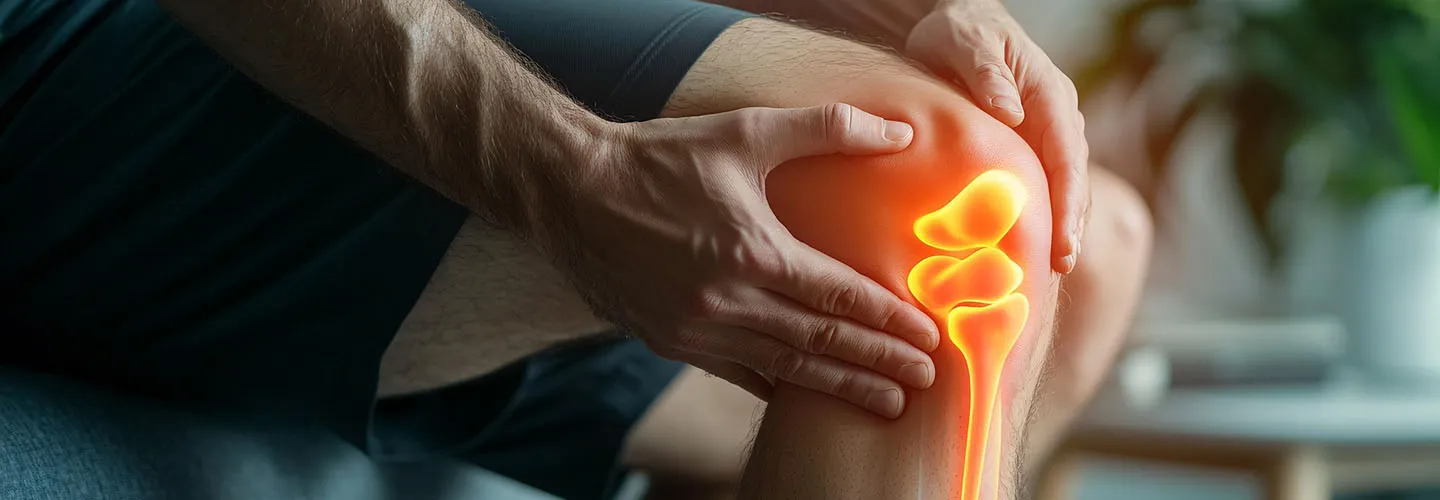
Knee pain while walking, stiffness after prolonged sitting, difficulty using stairs, or the feeling that the joint can no longer tolerate its usual load may be signs of osteoarthritis. This condition is also commonly referred to as knee arthrosis or gonarthrosis.

‍

Osteoarthritis is a chronic condition in which changes occur not only in the articular cartilage. The pathological process may also involve the subchondral bone, synovial membrane, ligaments, and other joint structures. For this reason, treatment is not limited to trying to “restore worn cartilage.” Its main goals are to reduce symptoms, maintain mobility and strength, and preserve the person’s ability to use the knee normally.

‍

One additional method that may be used as part of comprehensive conservative treatment is High-Intensity Laser Therapy (HILT). Its role is to help reduce pain and improve function, but laser therapy does not replace physical activity or the other components of osteoarthritis treatment.

‍

What Happens to the Knee in Osteoarthritis?

The knee joint is constantly exposed to significant loads, and its normal function depends on the condition of the cartilage, bone tissue, menisci, ligaments, muscles, and other structures. In osteoarthritis, the entire joint complex gradually changes, not only the cartilage surface.

‍

These changes do not always directly correspond to the severity of symptoms. One person may have visible signs of osteoarthritis on an X-ray but relatively little pain, while another may have substantial functional limitations. This is why the doctor evaluates not only imaging findings but also the patient’s symptoms, joint mobility, muscle strength, loading pattern, and the impact of the condition on everyday life.

‍

‍

What Does Knee Pain Feel Like in Osteoarthritis?

In the early stages, pain is often associated with physical load and improves with rest. A person may notice discomfort after a long walk, physical work, or exercise, even though the same level of activity previously caused no problems.

‍

As the condition progresses, symptoms may occur during ordinary daily activities. Typical signs of knee osteoarthritis include:

The intensity of symptoms may vary over time. Periods of relatively good function may alternate with flare-ups after unusual or excessive loading.

‍

What Causes Knee Osteoarthritis?

Osteoarthritis rarely has a single specific cause. Its development is influenced by a combination of age-related, mechanical, metabolic, and other factors, and the risk may increase after previous knee injuries or joint surgery.

‍

Physical load also plays an important role, but this does not mean that the knee should be protected from movement as much as possible. On the contrary, insufficient physical activity may contribute to loss of muscle strength and poorer function. The goal is to select a level of activity that the person can tolerate and gradually maintain or increase their physical capacity.

‍

How Is Knee Osteoarthritis Diagnosed?

Diagnosis begins with a discussion of symptoms and a clinical examination. The doctor evaluates the location and characteristics of pain, knee mobility, joint stability, muscle strength, and other findings that may help identify the source of symptoms.

‍

X-rays may be performed when necessary. They can show structural changes typical of osteoarthritis, including joint-space narrowing, osteophytes, and changes in the subchondral bone.

‍

MRI is not required for every patient with suspected osteoarthritis. It is used when the clinical situation requires a more detailed assessment of joint structures or when another possible diagnosis needs to be clarified.

‍

Does Osteoarthritis Mean the Cartilage Can No Longer Be Preserved?

Describing osteoarthritis simply as “wearing away of the cartilage” can create the misleading impression that once changes appear, the joint will inevitably continue to deteriorate. In reality, structural changes do not directly determine a person’s future level of pain or functional ability.

‍

Even when osteoarthritis is present, treatment can improve muscle strength, mobility, load tolerance, and symptom control. Functional outcome—how well a person can walk, work, perform daily activities, and remain physically active—is one of the key treatment goals.

‍

How Is Knee Osteoarthritis Treated?

Treatment depends on the severity of symptoms, functional limitations, associated conditions, and the individual needs of the patient. For most people, treatment begins with conservative methods.

‍

Physical activity and therapeutic exercise play an important role. The program may focus on strengthening the muscles of the lower limb, maintaining knee mobility, and gradually increasing the joint’s ability to tolerate physical load.

‍

Depending on the situation, the doctor may also consider medication and other methods of symptom control.

‍

If conservative treatment options have been exhausted and severe pain and functional limitations have a significant impact on daily life, the indications for surgical treatment are assessed separately.

‍

Device-based therapies have a supportive role in this treatment system. One of these methods is High-Intensity Laser Therapy (HILT).

‍

How Does HILT Work for Knee Osteoarthritis?

During High-Intensity Laser Therapy, tissues receive light energy with specific parameters. Absorption of this energy triggers physical and biological responses associated with photobiomodulation and mechanisms involved in pain modulation. HILT also has a controlled photothermal component.

‍

It is important for patients to understand the limitations of the method. Laser therapy does not “grow new cartilage” within several sessions and does not eliminate structural changes that have already developed in the joint.

‍

The main clinical goal of HILT in osteoarthritis is to reduce pain and improve functional status when the treatment is clinically indicated.

‍

Pain reduction may also have practical value because it can make movement and prescribed exercises easier. For this reason, HILT is better considered as part of an overall rehabilitation program rather than as an isolated treatment.

‍

What Does Research Show About HILT for Knee Osteoarthritis?

High-Intensity Laser Therapy has been studied in patients with knee osteoarthritis. A 2023 systematic review and meta-analysis included nine studies of HILT in patients with symptomatic knee osteoarthritis. The included studies reported improvements in pain, although the methodological quality of the studies varied.

‍

Positive results have also been reported in studies where laser therapy was combined with exercise. This corresponds with the logic of comprehensive treatment: the physical modality is used to address symptoms, while exercise targets strength, mobility, and functional capacity.

‍

Another systematic review and network meta-analysis of HILT and LLLT combined with exercise also reported positive outcomes for pain and function in knee osteoarthritis.

‍

At the same time, laser therapy studies vary considerably in treatment parameters, so applying one specific protocol to every patient would not be appropriate.

‍

Current evidence supports considering HILT as an additional method within conservative treatment rather than as an alternative to the overall osteoarthritis management program.

‍

Why Should Laser Therapy Be Combined with Exercise?

Pain can create a cycle that gradually reduces function. A person begins to place less load on the leg, which may lead to reduced muscle strength and a lower ability to perform everyday activities. As a result, even moderate physical load may become harder to tolerate and may trigger symptoms again.

‍

If HILT helps reduce pain, this period can be used to work on function. Exercises are selected to gradually strengthen the muscles and increase physical load without sudden increases in intensity.

‍

For this reason, treatment results should not be evaluated only by a pain score. It is equally important to assess whether walking, standing up from a chair, using stairs, and performing other necessary daily activities have become easier.

‍

When Can High-Intensity Laser Therapy Be Considered?

The appropriateness of HILT is determined after assessing the patient’s condition. The word “osteoarthritis” in an X-ray report alone does not mean that a person needs laser therapy.

‍

The method may be considered as part of conservative treatment when osteoarthritis is accompanied by pain and functional limitations and the doctor identifies a clinical indication for this type of treatment.

‍

Contraindications to the procedure and the patient’s other medical conditions must also be taken into account.

‍

The treatment plan may differ significantly between two people with the same radiographic stage of osteoarthritis because their symptoms, physical abilities, and individual needs may be completely different.

‍

Can Osteoarthritis Be Treated with Laser Therapy Alone?

Relying on a single device-based therapy for a chronic joint condition is not advisable. HILT may help control symptoms, but it does not replace treatment aimed at restoring and maintaining everyday knee function.

‍

If pain has caused a person to lose strength, reduce activity, or become unable to tolerate their usual physical demands, these abilities need to be gradually restored as symptoms improve.

‍

This is why laser therapy and physical rehabilitation address different but closely related treatment goals.

‍

Is Surgery Necessary for Knee Osteoarthritis?

A diagnosis of osteoarthritis does not automatically mean that surgery is required. Many patients can control their symptoms with conservative treatment for a long time while remaining physically active.

‍

Surgical treatment is considered when pain and functional limitations become severe, significantly affect everyday life, and properly conducted conservative treatment has not provided an acceptable result.

‍

In such cases, the decision is made individually after assessing the condition of the joint and the patient’s needs.

‍

High-Intensity Laser Therapy for Knee Osteoarthritis at Mashtaler Ortho&Trauma

At Mashtaler Ortho&Trauma, we use the BTL High Intensity Laser system for HILT.

‍

Before prescribing the procedure, it is important to determine the cause of knee pain and assess not only imaging findings but also joint function.

‍

If High-Intensity Laser Therapy (HILT) is clinically indicated, it may be included in a comprehensive conservative treatment program together with physical rehabilitation and other necessary methods.

‍

The goal of this approach is not simply to achieve a temporary reduction in pain, but to help the person use the knee more effectively and gradually return to the required level of everyday activity.

Methods of treatment of this disease

No items found.

830 UAH

High-intensity laser (price for 1 site, each subsequent section costs an additional 300 UAH)

Industry experts

The whole team

Patients’ stories

No items found.

Online booking

Required field*
Thank you!
Our administrators will contact you shortly
Oops.. something is wrong. Try reloading the page 
and repeat again!
Online recording