Grazie! Your submission has been received!
Oops! Something went wrong while submitting the form.
Search icon
Skript
Found:
This is some text inside a div block.
Articles
High-Intensity Laser Therapy: How HILT Works
HILT is a physical therapy method in which tissues are exposed to high-power laser radiation. Light energy is absorbed by the tissues, and the way it interacts with them depends on the wavelength, power, operating mode of the device, duration of exposure, and properties of the tissue itself.
#foot
#knee
#back
Knee Osteoarthritis: HILT
In the early stages, pain is often associated with physical load and improves with rest. A person may notice discomfort after a long walk, physical work, or exercise, even though the same level of activity previously caused no problems.
#knee
Disc Protrusion: Can It Be Treated Without Surgery?
Spinal disc protrusion can cause pain, numbness, and weakness in the limbs. Learn about diagnosis, non-surgical treatment, and rehabilitation.
#back
Herniated Disc: Symptoms, Causes, and Treatment Options
A herniated disc is a localized displacement of disc tissue beyond its normal anatomical boundaries.
#back
Rehabilitation After Arthroscopy: What You Need to Know
After joint arthroscopy, it is necessary to restore movement, weight-bearing ability, muscle strength, and the capacity to tolerate everyday activity.
#hand
#knee
#elbow
#shoulder
#foot
Shoulder and Arm Pain: Causes and Treatment
The shoulder has a wide range of motion, which makes it particularly sensitive to injuries, overuse, and inflammatory changes.
#shoulder
Intra-Articular Injections: Indications and Risks
Intra-articular injections are a common treatment option for joint pain. They may provide relatively rapid relief, improve mobility, and help a person return to everyday activities.
#knee
#shoulder
#thigh
Ankylosing Spondylitis: What It Is, Symptoms, and Diagnosis
Ankylosing spondylitis, also known as Bechterew’s disease, is a chronic inflammatory condition that affects the spine and sacroiliac joints. Over time, it can limit mobility and significantly affect quality of life.
#back
Osteoarthritis of the Joints: Symptoms, Causes, and Treatment
Osteoarthritis is a chronic disease of the entire joint in which the articular cartilage gradually deteriorates, bone tissue changes, and the surrounding joint structures function less effectively.
#hand
#knee
#elbow
#shoulder
#thigh
Rheumatoid Arthritis: Symptoms and Rheumatoid Factor
Rheumatoid arthritis is a systemic autoimmune inflammatory disease that affects the joints, tendon sheaths, and other tissues throughout the body.
#hand
De Quervain’s Disease: Symptoms and Treatment Methods
De Quervain’s disease, also known as De Quervain’s tenosynovitis, is a condition affecting the first extensor compartment of the wrist. The thumb tendons pass through a narrowed tunnel and begin to glide with pain.
#hand
Hygroma: Causes and Effective Treatment
A hygroma is a superficial, bony formation near a joint or tendon canal that most often appears on the hand, wrist, or fingers.
#hand
Trigger Finger (Stenosing Tenosynovitis)
Stenosing ligamentitis disrupts the normal gliding of the finger tendon and gradually makes the usual hand movements more difficult. At first, a person feels stiffness, then a painful clicking appears, and at later stages the finger becomes fixed in a bent position.
#hand
Why Does a Finger Hurt: Main Causes and Treatment
Pain in the finger appears after injury, overload, inflammation or compression of the nerve. The symptom itself does not indicate one specific problem, because the source of discomfort can be a joint, tendons, ligaments, nerve or surrounding soft tissues.
#hand
Joint Contracture: Causes, Symptoms, Types, and Treatment Methods
Joint contracture is a persistent decrease in range of motion due to changes in the soft tissues and other structures around the joint. This condition interferes with everyday activities and can significantly worsen quality of life.
#hand
Can You Run with Osteoarthritis?
When running with arthrosis is possible, in which cases it is strictly not recommended, and what alternatives should be considered in order to maintain movement without harm to the joints - says Vasily Mellen, orthopedic surgeon and traumatologist of Mashtaler Ortho&Trauma Clinic.
#knee
What Are Compression Stockings?
When people think about treatment of the musculoskeletal system, they usually imagine surgery, fixation, and exercise. However, there is another component that works almost unnoticed while significantly affecting the recovery process: compression stockings.
#foot
#knee
Rehabilitation and Life After Hip Replacement
The pain that caused sleepless nights, restricted movement, and changed daily habits disappears. In the first days after surgery, patients notice that it becomes easier to stand up and sit down. It is a relief to stop thinking about every step.
#thigh
Innovative Bikini Approach for Hip Replacement Surgery
Bikini approach is a relatively new, minimally invasive method that is distinguished by its delicacy, less trauma and expressive aesthetics.
#thigh
Donor Meniscus Transplantation
This is an important milestone, as the procedure has been performed only eight times in Ukraine.
No items found.
Anterior Cruciate Ligament (ACL) Tear
The anterior cruciate ligament connects the femur and the tibia, helping stabilize the knee during bending, pivoting, and walking.
#knee
Super Inductive System
Super Inductive System (also known as High-Intensity Magnetotherapy) is a modern, effective, and safe method of pain treatment that works without invasive intervention.
#hand
#knee
#thigh
#elbow
#shoulder

High-Intensity Laser Therapy: How HILT Works and How It Differs from Conventional Laser Therapy

#method

Laser therapy has been used in physical medicine and rehabilitation for several decades, but the equipment and methods of application vary considerably. One modern approach is High-Intensity Laser Therapy (HILT), which allows significantly greater power to be delivered to tissues compared with traditional low-level laser systems.

‍

In orthopedics, HILT is primarily used as part of comprehensive treatment for conditions associated with pain and impaired musculoskeletal function. At the same time, higher power does not automatically mean that this type of laser is more effective than other methods. The diagnosis, treatment parameters, dose, treatment area, and other components of the treatment program are all important.

‍

What Is High-Intensity Laser Therapy (HILT)?

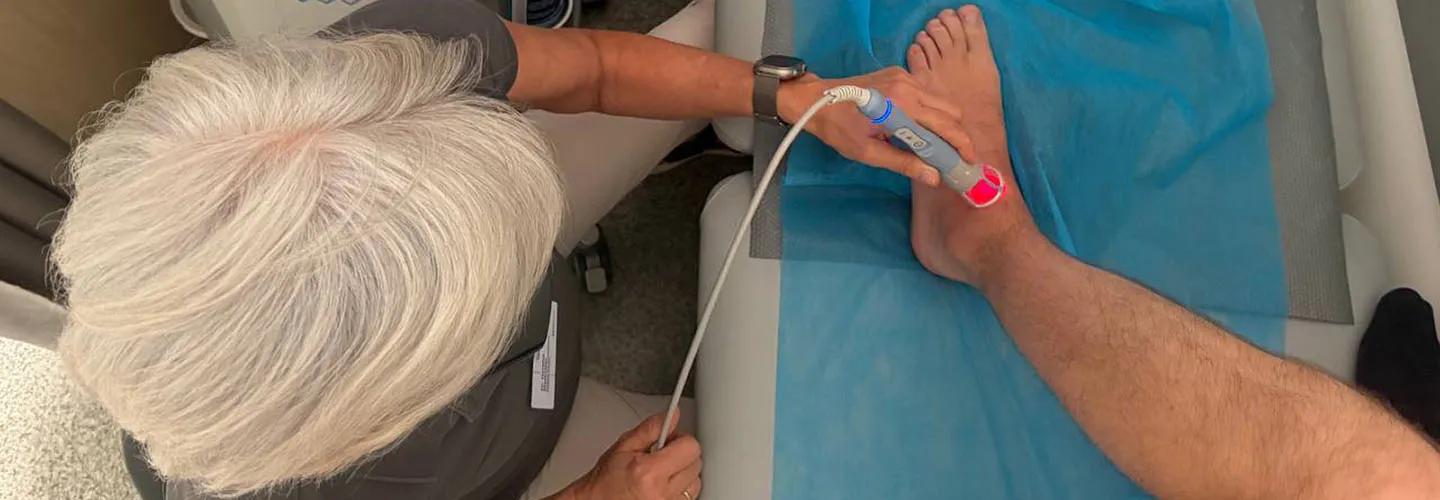
HILT is a physical therapy method in which tissues are exposed to high-power laser radiation. Light energy is absorbed by the tissues, and the way it interacts with them depends on the wavelength, power, operating mode of the device, duration of exposure, and properties of the tissue itself.

‍

The term “high-intensity” describes the characteristics of the laser system rather than the intensity of the patient’s sensations. The procedure should not involve uncontrolled tissue heating or severe pain. Modern systems allow treatment parameters to be adjusted according to the clinical goal and the area being treated.

‍

‍

How Does Laser Radiation Interact with Tissues?

When laser radiation reaches the skin, some of the light is reflected, some is scattered, and some is absorbed by tissue structures. It is the absorbed energy that can produce a biological response.

‍

Several parameters are important in therapeutic laser treatment:

For this reason, it is not appropriate to evaluate laser therapy based solely on the number of watts. Two devices with different power outputs may use different modes, treatment durations, and doses, while the clinical result depends on the combination of all these parameters.

‍

What Happens in Tissues During Laser Therapy?

The biological effects of therapeutic laser treatment are associated with the absorption of photons by tissue molecules and subsequent photochemical and physiological responses. This process is often described by the term photobiomodulation.

‍

At the cellular level, researchers study changes related to cellular metabolism, signaling mechanisms, and local tissue responses. With high-intensity systems, the photothermal component also becomes more relevant because delivering greater amounts of energy can cause a controlled increase in tissue temperature.

‍

However, it would be an oversimplification to state that HILT “accelerates healing” through one universal mechanism. The response depends on the type of tissue, dose, laser parameters, and the specific pathological process. Clinical outcomes therefore need to be evaluated separately for different conditions.

‍

How Does HILT Differ from Low-Level Laser Therapy?

Traditional low-level laser therapy is known as LLLT (Low-Level Laser Therapy). In current literature, the term photobiomodulation therapy is also widely used to describe low-intensity light-based treatment.

The main technical difference lies in the laser parameters and HILT’s ability to deliver greater power and the required energy dose in a shorter period of time. This expands the range of treatment protocols that can be used, but it does not mean that the principle “more power is better” applies in medicine.

‍

In 2026, a systematic review and network meta-analysis of 22 randomized trials directly compared HILT and LLLT for musculoskeletal conditions. In some comparisons, high-intensity therapy produced a statistically greater reduction in pain. However, the magnitude of the advantage was generally small and often did not reach the threshold for a clinically meaningful difference. The authors also rated confidence in most of the findings as very low.

‍

For this reason, HILT and LLLT are better considered technologies with different parameters and potential applications rather than simply “strong” and “weak” versions of the same treatment.

‍

Can High-Intensity Laser Therapy Reach Deep Tissues?

The ability of light to penetrate tissues depends on more than the power of the device. Wavelength, absorption by different chromophores, light scattering, tissue thickness, and other physical factors also play a role.

‍

Higher power makes it possible to deliver the required amount of energy more quickly and to use therapeutic protocols that cannot be reproduced in exactly the same way with a low-power device within the same period of time. However, statements such as “the laser penetrates exactly a certain number of centimeters” oversimplify the physics of light propagation through biological tissues unless the specific conditions are clearly defined.

‍

For the patient, the maximum claimed penetration depth of the device is less important than whether the treatment parameters are appropriate for the specific condition and clinical goal.

‍

What Is HILT Used for in Orthopedics?

High-Intensity Laser Therapy has been studied in a variety of musculoskeletal conditions, particularly those associated with pain and functional limitations. These include disorders of the joints, tendons, and periarticular tissues, as well as certain spinal pain syndromes.

‍

In clinical practice, indications should not be determined simply because a person “has pain somewhere.” Before the procedure is prescribed, it is important to identify the likely source of symptoms and determine what role laser therapy is expected to play within the overall treatment program.

‍

For example, in tendinopathy, treatment should restore the tendon’s ability to tolerate load. In osteoarthritis, the goals include maintaining joint mobility, strength, and everyday function. In these situations, HILT may serve as an additional tool for managing pain and functional limitations, but it does not replace the other components of treatment.

‍

What Does Evidence-Based Medicine Say About HILT?

The number of clinical studies investigating High-Intensity Laser Therapy has increased significantly in recent years. One of the largest systematic reviews and meta-analyses of HILT for musculoskeletal conditions included 48 randomized clinical trials, 44 of which were included in the quantitative analysis.

‍

Overall, the results showed reductions in pain and improvements in function among patients who received HILT. At the same time, the authors rated the quality of evidence as low for pain outcomes and moderate for function. They also noted a high risk of bias in some of the included studies.

‍

Effectiveness also varied depending on the condition and what HILT was compared with. The benefit was more pronounced when HILT was compared with a control group than when it was compared with other conservative treatment methods.

‍

This is an important distinction: positive research findings support the potential clinical use of HILT, but they do not mean that it is equally effective for every type of pain or every musculoskeletal condition.

‍

Why Is HILT Better Considered as Part of Comprehensive Treatment?

In rehabilitation, the goal is not only to temporarily reduce the intensity of symptoms but also to restore function. If the underlying problem involves reduced tissue load tolerance, limited mobility, muscle weakness, or impaired movement function, a device-based treatment alone cannot address all of these factors.

‍

This is why HILT may be combined with physical therapy and other treatment methods according to the established diagnosis. Reducing pain in this context may create better conditions for restoring movement and gradually increasing physical load.

‍

This approach is also consistent with current scientific evidence. A 2026 meta-analysis reported promising results for combining HILT with exercise, although the authors emphasized the considerable uncertainty of these comparisons and the need for further high-quality studies.

‍

What Does High-Intensity Laser Therapy Feel Like During the Procedure?

Sensations depend on the device parameters, operating mode, and treatment area. Because of the photothermal component, the patient may feel warmth, but the procedure should not involve uncontrolled or excessively intense tissue heating.

‍

For this reason, High-Intensity Laser Therapy requires appropriate parameter selection and adherence to safety protocols. Laser radiation also requires proper eye protection during the procedure for both the patient and the specialist.

‍

BTL High-Intensity Laser Therapy at Mashtaler Ortho&Trauma

At Mashtaler Ortho&Trauma, we use the BTL High Intensity Laser system for High-Intensity Laser Therapy (HILT). The equipment allows laser parameters to be adjusted according to the treatment area and clinical goal.

‍

The decision to use HILT is not based solely on the location of pain. The first step is to determine the likely cause of the symptoms, assess the condition and function of the musculoskeletal system, and understand what role laser therapy may play within the overall treatment program.

‍

In this context, High-Intensity Laser Therapy is not a standalone treatment, but one of the available tools in orthopedics and rehabilitation. Its appropriateness depends on the diagnosis, clinical situation, and the goals that need to be achieved to help the patient return to normal movement and physical activity.

Methods of treatment of this disease

No items found.

830 UAH

High-intensity laser (price for 1 site, each subsequent section costs an additional 300 UAH)

Industry experts

The whole team

Patients’ stories

No items found.

Online booking

Required field*
Thank you!
Our administrators will contact you shortly
Oops.. something is wrong. Try reloading the page 
and repeat again!
Online recording